


By Alusine Samuel Kargbo Day Break
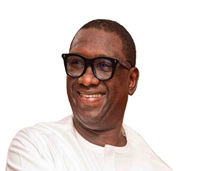
Dr. Ibrahim Bangura has opened up about his vision for Sierra Leone, declaring that he has a dream of seeing a country where every citizen can live with dignity, access meaningful opportunities and believe in a better future.
Speaking about his aspirations for the country, Dr. Bangura presented a vision centred on national development, economic transformation, accountable leadership and the creation of opportunities for Sierra Leoneans, particularly young people who continue to look to the future with both hope and concern.
His message comes at a time when national conversations are increasingly focused on the direction Sierra Leone should take in the years ahead. With political parties and potential presidential contenders already positioning themselves for the country’s next political chapter, Dr. Bangura says Sierra Leone needs leadership capable of turning the country’s enormous potential into tangible benefits for ordinary citizens.
A DREAM BEYOND POLITICS
For Dr. Bangura, the dream for Sierra Leone should not simply be about winning elections or changing political leadership. Rather, he argues that the country’s future must be built around a broader national vision capable of bringing together citizens across political, regional and social divides.
He believes Sierra Leone has the human resources, natural wealth, agricultural potential and strategic geographical position necessary to become a stronger and more prosperous nation.
But unlocking that potential, he maintains, requires serious investment, competent institutions, responsible leadership and policies that put national interest above political and personal considerations.
His vision therefore places emphasis on building a country where government institutions work effectively, public resources are managed responsibly and citizens are given genuine opportunities to improve their lives.
YOUNG PEOPLE AT THE CENTRE OF THE VISION
One of the major issues confronting Sierra Leone is youth unemployment and the lack of sufficient economic opportunities.
Dr. Bangura’s vision places young people at the heart of national transformation, arguing that the country’s youthful population should be viewed not as a burden but as one of Sierra Leone’s greatest assets.
A Sierra Leone with more technical and vocational opportunities, stronger entrepreneurship programmes, better access to finance and a private sector capable of creating sustainable jobs, he suggests, would give young people reasons to remain optimistic about their future.
The challenge, therefore, is not simply to encourage young people to look for government jobs, but to create an economy in which businesses can grow, industries can expand and young Sierra Leoneans can build their own enterprises.
TRANSFORMING THE ECONOMY
Dr. Bangura also sees economic transformation as critical to achieving his dream for Sierra Leone.
The country is blessed with mineral resources, fertile agricultural land, fisheries and significant human capital. Yet the benefits of these resources have not always translated into broad-based prosperity for ordinary citizens.
His vision points towards a stronger productive economy where agriculture, mining, manufacturing, tourism, technology and small and medium-sized enterprises can contribute meaningfully to national development.
The emphasis, according to this vision, should be on moving Sierra Leone beyond dependence on the export of raw materials and towards greater local processing and value addition.
Such an approach could create jobs, increase government revenues, support local businesses and ensure that more of the wealth generated from Sierra Leone’s resources remains within the country.
A SIERRA LEONE WHERE INSTITUTIONS MATTER
Another important element of the dream is the strengthening of national institutions.
For any country to develop sustainably, Dr. Bangura argues, institutions must be stronger than individuals and national systems must be capable of functioning regardless of who occupies political office.
A stronger justice system, professional public service, transparent procurement processes, effective regulatory institutions and accountable leadership are essential ingredients for building public confidence.
The vision therefore calls for a culture in which public office is regarded as a responsibility rather than an opportunity for personal enrichment.
INVESTING IN EDUCATION AND SKILLS
Education, according to the broader vision, must remain one of the country’s most important investments.
Dr. Bangura believes Sierra Leone’s future depends heavily on the quality of education and skills available to its citizens.
Beyond academic education, the country needs to strengthen technical and vocational training so that young people can acquire practical skills relevant to the modern economy.
From engineering and information technology to agriculture, construction, healthcare, renewable energy and entrepreneurship, Sierra Leone needs a workforce equipped to compete in an increasingly interconnected world.
HEALTHCARE AND HUMAN DEVELOPMENT
A prosperous country cannot be built without a healthy population.
Dr. Bangura’s vision therefore places human development alongside economic growth, with emphasis on improving healthcare delivery, strengthening health infrastructure and ensuring that citizens can access quality medical services without facing unnecessary barriers.
For many Sierra Leoneans, access to reliable healthcare remains one of the most important measures of whether national development is actually improving everyday life.
The dream, therefore, is of a Sierra Leone where development is measured not only by roads and buildings but also by healthier families, better schools, longer productive lives and greater economic security.
AGRICULTURE AS A NATIONAL PRIORITY
Agriculture also has a major role to play in the proposed vision.
Sierra Leone has significant agricultural potential, yet the country continues to spend substantial resources importing food that could potentially be produced locally.
Dr. Bangura’s vision could see agriculture transformed from subsistence farming into a modern commercial sector supported by irrigation, mechanisation, improved seeds, storage facilities, processing industries, access to markets and affordable financing.
The objective would be to empower farmers while also creating opportunities for young people to see agriculture as a profitable business rather than simply a traditional occupation.
INFRASTRUCTURE AND CONNECTIVITY
No modern economy can thrive without reliable infrastructure.
Roads, electricity, water supply, telecommunications and digital connectivity are critical to economic development.
A long-term national development strategy must therefore ensure that infrastructure investment reaches communities beyond the major urban centres.
Improved connectivity between rural communities and commercial centres could reduce transportation costs, increase access to markets and encourage investment in areas that have historically remained economically marginalised.
NATIONAL UNITY
At the heart of the dream is also the question of national unity.
Sierra Leone has experienced intense political competition over the years, with political divisions sometimes extending into communities and families.
Dr. Bangura’s vision presents the argument that political differences should not prevent Sierra Leoneans from working together around common national objectives.
The country, he suggests, needs a politics that allows disagreement without destroying national cohesion and competition without turning citizens against one another.
The Sierra Leone of the future, in this vision, must belong to everyone—regardless of political affiliation, region, ethnicity, religion or social background.
A CALL FOR RESPONSIBLE LEADERSHIP
Dr. Bangura’s declaration ultimately places leadership at the centre of the country’s future.
His argument is that Sierra Leone does not lack potential; rather, the country needs leadership capable of converting potential into results.
Such leadership would require long-term planning, discipline, transparency, competence and the willingness to make difficult decisions in the national interest.
For supporters of his political aspirations, the declaration represents more than a campaign message. It is being presented as a call for Sierra Leoneans to imagine what their country could become if its resources and human capital were effectively harnessed.
THE ROAD AHEAD
As Sierra Leone moves towards another important political chapter, competing visions for the country’s future will increasingly become part of the national conversation.
Dr. Ibrahim Bangura’s declaration that “I have a dream for Sierra Leone” places his vision firmly within that debate.
The real test, however, will be how such a dream can be translated into practical policies, measurable programmes and results that ordinary Sierra Leoneans can experience in their daily lives.
For a country rich in natural resources but still facing significant development challenges, the dream of a better Sierra Leone will ultimately require more than speeches.
It will require commitment, competent leadership, strong institutions, economic discipline and the collective determination of citizens to build a nation in which opportunity is not reserved for a few.
Dr. Bangura’s message is therefore not simply about what Sierra Leone is today—it is about what Sierra Leone could become tomorrow.