
Defence Ministry Seeks NLe7.59B Budget
By. Musa Conteh
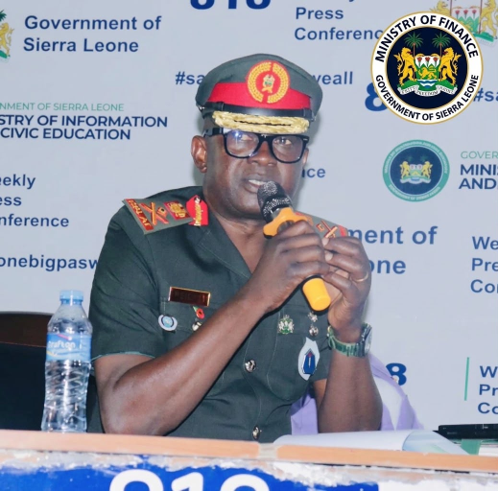
The Ministry of Defence has unveiled an ambitious set of priorities for the 2027 financial year, seeking NLe7.59 billion to strengthen Sierra Leone’s defence capabilities, enhance national security and build a more professional and responsive armed forces.
The Ministry made the disclosure on Monday, September 28, during the ongoing FY2027 Bilateral Budget Hearings, outlining major investments in personnel recruitment and training, border security, maritime and air surveillance, cybersecurity, barracks development, military healthcare and specialised operational capabilities.
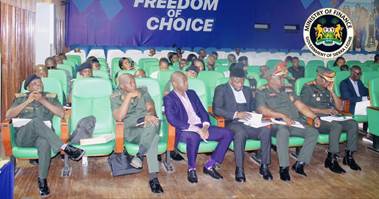
Of the total amount requested, NLe1.29 billion is earmarked for recurrent expenditure, while NLe6.30 billion is required for Public Investment Programmes (PIPs).
The budget presentation was facilitated by Deputy Director of Budget Jacob Tenga Sessie and Deputy Director of Fiscal Decentralization Ibrahim Bureh, who underscored the importance of the budget process in ensuring accountability, transparency and prudent management of public resources.
Welcoming the Ministry’s delegation, Jacob Tenga Sessie noted that the budget process is undertaken in fulfillment of Sierra Leone’s legal and public financial management requirements, particularly in ensuring accountability for resources allocated to Ministries, Departments and Agencies and how such resources are utilised.
Deputy Minister of Defence Colonel (Rtd) Muana Brima Massaquoi described the budget hearing as an important exercise for national accountability, transparency and due diligence.
Building a Professional and Capable Armed Forces
The Chief of Defence Staff, Lieutenant General Amara Idara Bangura, said Sierra Leone’s Defence Policy and Strategy remains central to the Ministry’s efforts to protect the country’s sovereignty, maintain national stability, support development and uphold democratic governance.
He explained that the Ministry’s strategic vision extends beyond 2035, with a focus on developing a professional, disciplined and capable force that can respond effectively to emerging security threats at national, regional and global levels.
The Ministry identified a number of strategic defence objectives, including deterring and responding to terrorism and subversion, protecting Sierra Leone’s Exclusive Economic Zone and marine resources, maintaining effective air surveillance and intelligence capabilities, and strengthening the capacity of the Ministry of Defence and the Republic of Sierra Leone Armed Forces (RSLAF).
The Ministry also emphasised its role in supporting regional and sub-regional peace and security through military capabilities and peacekeeping engagements.
Border Security and Emerging Threats
According to the Ministry, its defence strategy covers several critical areas, including border security, counter-terrorism, emergency response, maritime security, air power and cybersecurity.
The RSLAF is also expected to continue contributing to national development through agriculture, civil construction and engineering, healthcare, international peace missions and other strategic national initiatives, including the garment factory.
The Ministry said strengthening border security remains a major priority, particularly through the recruitment and training of 500 border guards.
1,800 New Personnel Targeted for 2027
As part of its FY2027 priorities, the Ministry plans to recruit and train 1,800 personnel, including 300 specialists, alongside the recruitment of 500 border guards.
The Ministry also intends to provide professional military training for at least 30 percent of personnel, while strengthening specialised units and improving the operational readiness of the armed forces.
Among the key priorities is the operationalisation of C5ISTAR and cybersecurity capabilities, which are expected to enhance command, control, communications, intelligence, surveillance, target acquisition and reconnaissance capabilities.
The Ministry also plans to construct and refurbish military barracks, establish Level III healthcare services, and equip and accommodate the Commando Regiment.
FY2026 Targets and Challenges
During the presentation, the Ministry provided an update on its FY2026 implementation.
It reported that 1,624 personnel were being recruited and trained, with 1,452 currently in training. However, the recruitment of 500 border guards remained outstanding.
The Ministry also reported that the establishment of the Tri-Service structure, construction and refurbishment of barracks, and establishment of Level III hospital capability were among the areas that had not been achieved during the period under review.
These gaps have consequently been incorporated into the Ministry’s FY2027 priorities.
Budget Execution and Major Expenditure Drivers
The Ministry disclosed that its FY2026 budget request stood at NLe1.7359 billion, compared with an approved budget of NLe286.9 million.
Between January and September 2026, the Ministry reported actual disbursements amounting to NLe533 million.
Major expenditure drivers included NLe114.69 million for rice, NLe105.28 million for fuel, NLe63.46 million for ration cash allowance and running costs, NLe40.64 million for recruitment and training, NLe58.70 million for uniforms, and NLe50.69 million for vehicles.
The figures highlighted the significant operational and logistical costs associated with maintaining an effective and adequately equipped military force.
A Forward-Looking Defence Strategy
The FY2027 proposal reflects the Ministry’s intention to move beyond routine military operations and invest more heavily in modern defence capabilities, personnel development and strategic infrastructure.
With growing emphasis on cybersecurity, maritime security, air surveillance, border protection and specialised military training, the Ministry says its objective is to ensure that Sierra Leone maintains a defence force capable of responding to both traditional and emerging security threats.
The Ministry’s proposed investments in healthcare, barracks, specialised personnel and operational capabilities are also expected to improve the welfare, readiness and professionalism of members of the RSLAF.
The FY2027 Bilateral Budget Hearings therefore provided an important platform for stakeholders to scrutinise the Ministry’s proposed programmes, expenditure requirements and expected deliverables, while ensuring that the requested resources are aligned with Sierra Leone’s broader national development and security priorities