


NPHA Breaks Silence
By Abdulai Sankoh
The National Public Health Agency (NPHA), in collaboration with the Independent Media Commission (IMC), on Wednesday, October 21, 2026, engaged media practitioners on emergency preparedness, with particular emphasis on Ebola prevention, early warning systems and responsible public health reporting.
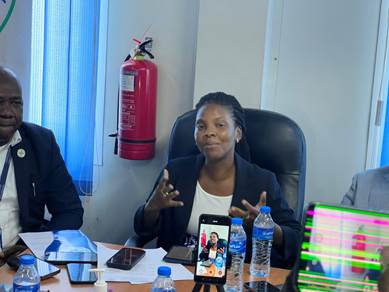
The engagement, held at the NPHA Conference Hall on Wilkinson Road in Freetown, brought together health authorities, development partners and media practitioners to strengthen collaboration in emergency preparedness and response, improve public awareness and combat misinformation during public health emergencies.
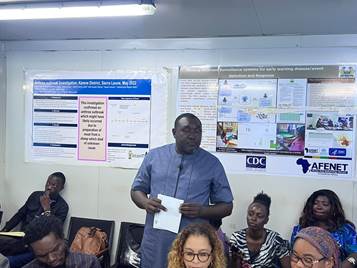
Speaking on the objectives of the engagement, Harold Thomas, Risk Communication Lead at the Ministry of Health, said the initiative was intended to improve media understanding of emergency preparedness, strengthen early warning systems and promote responsible reporting on Ebola preparedness and other public health issues.
He emphasised the importance of coordination between health authorities and the media in addressing misinformation, identifying communication challenges and ensuring that accurate information reaches the public.
“It is important we all work together,” Thomas said.
The Executive Director of the National Public Health Agency, Professor Foday Sahr, underscored the critical role of the media in shaping public understanding during health emergencies.
He said the information disseminated by journalists was essential, particularly during emergencies, when inaccurate reporting could create unnecessary fear and confusion.
“There is no Ebola case in Sierra Leone. We are preparing because it is our job, not because Ebola is here,” Professor Sahr stated.
He explained that the agency had conducted two emergency preparedness assessments in 2026, in May and October, in collaboration with the Ministry of Health and other partners.
Professor Sahr noted that Sierra Leone’s preparedness measures included strengthening laboratory capacity, introducing screening measures at airports and border-crossing points, and maintaining a free emergency reporting line through 117.
He said the country’s national laboratory had the capacity to confirm cases locally without sending samples overseas, while rapid response teams were available in every district to respond to emergencies.
He also highlighted the importance of monitoring developments in other countries, particularly those with which Sierra Leone maintains significant travel links for business, education and family visits.
According to him, early detection remains critical to preventing the spread of infectious diseases, and travellers returning from affected countries should monitor their health for 21 days.
He advised anyone who develops symptoms such as fever, headache and weakness within 21 days of travelling from an affected area to call 117 for guidance.
Professor Sahr further urged healthcare workers to use appropriate protective equipment, wash their hands with soap and water, and avoid direct contact with the bodily fluids of suspected patients.
He appealed to journalists to rely on verified information from official health authorities, avoid sensational headlines, repeat practical prevention messages and share rumours circulating in their communities with health officials for clarification.
He also encouraged media institutions to provide health experts with airtime to improve public education and awareness.
“If there is a case in this country, you will hear it from us. Early detection and preparedness are not panic, this is what responsible people do to be ready if it comes,”
John Klena, an adviser to the West Africa Regional Laboratory under the United States Center for Disease Control and Prevention (US CDC), said the situation underscored the importance of preparedness as a key component of regional health security.
He reaffirmed the US CDC’s commitment to supporting preparedness efforts and coordinated responses to public health emergencies.
“For CDC, our message today is preparedness and commitment to partner with the people of Sierra Leone,” Klena said.
Victor Caulker, Emergency Preparedness and Response Team Lead at the World Health Organization (WHO) Country Office, said a risk assessment conducted during the outbreak in the Democratic Republic of Congo had classified Sierra Leone as a low-risk country at that time.
He stressed the need for continued vigilance as public health threats evolve across countries and regions.
Caulker reaffirmed WHO’s commitment to supporting Sierra Leone’s preparedness and response efforts, including efforts to mobilise resources for emergency readiness.
He also called on media practitioners to strengthen collaboration with health authorities and ensure that public health information is accurate, timely and responsible.
UNICEF Representative Mariko Kagoshima said Ebola preparedness should not be limited to health authorities but must also involve communities and other stakeholders.
She thanked the organisers and partners for bringing media practitioners and health professionals together, noting that UNICEF remained committed to protecting children and supporting access to safe water, sanitation and nutrition.
Kagoshima emphasised that lessons learned from communities could help strengthen the country’s readiness for future outbreaks.
She further highlighted the importance of addressing information gaps, supporting frontline workers and ensuring that public health messages reached everyone, including persons with disabilities and people facing language barriers.
She described the media as a vital partner in identifying community concerns and communicating essential health information.
Deputy Minister of Health II, Dr Jalikatu Mustapha, commended health workers and development partners for their continued support in strengthening the country’s emergency preparedness.
She said the government had put measures in place to improve readiness while continuing to assess existing data and lessons from previous outbreaks.
Mustapha noted that the spread of infectious diseases from one country to another was not unexpected, making regional coordination and effective border surveillance essential.
She said Sierra Leone was working to strengthen security at its points of entry and ensure that individuals identified as requiring care would receive appropriate treatment.
The Deputy Minister also stressed that timely treatment and effective response measures were crucial to protecting other members of the public.
She cautioned against public panic, emphasising that people should continue to visit health facilities for routine medical care and other illnesses unrelated to Ebola.
Mustapha further urged journalists to work closely with health authorities and communities to ensure that people received accurate information, particularly concerning individuals displaying symptoms that required medical assessment.
She warned that reliance on unverified information, including attempts to address outbreaks solely through religious or traditional practices, could undermine effective public health responses.
“Let us trust in our health authorities; they are here to protect you. Unity is our strength,” she said.
Mustapha Kallon of the Independent Media Commission provided guidance to media practitioners on professional reporting during public health emergencies.
He urged journalists to adhere to established professional standards and follow the commission’s guidelines when reporting on emergency situations.