




SLPHA DG Appeals for Collective African Response to Cyber Threats
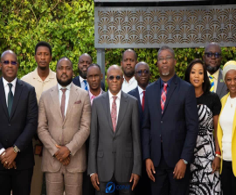
The Director General of the Sierra Leone Ports and Harbours Authority (SLPHA), Mr. Yankuba Askia Bio, has led a high-level delegation to the Conference of African Ports (COPAF 2026), held in Casablanca, Morocco, from October 19 to 21, 2026, where discussions focused on the role of artificial intelligence (AI) and cybersecurity in transforming Africa’s port sector.
Mr. Bio was accompanied by the SLPHA Directors of Research, Planning and Development; Technical Services; and Internal Audit and Compliance.
Held under the theme “African Smart Port: AI and Cybersecurity Driving Performance,” the conference brought together African port leaders and industry stakeholders to examine how digital innovation and stronger cybersecurity systems can improve port efficiency, safety and competitiveness.
During the conference, Mr. Bio engaged with his regional counterpart, Mr. Abubakarr Dantsoho, Director General of the Nigerian Ports Authority (NPA), as discussions highlighted the growing importance of technology in facilitating trade across the continent.
Addressing his peers, Mr. Bio emphasized that the era of traditional, manual port operations is giving way to smarter, technology-driven systems. He noted that, with the African Continental Free Trade Area (AfCFTA) advancing regional integration, African ports have become critical links in the continent’s expanding trade network. “If these arteries are clogged by inefficiency or compromised by vulnerability, the entire body of African trade suffers,” he stated.
Highlighting SLPHA’s strategic shift from reactive management towards predictive intelligence, Mr. Bio stressed the importance of treating cybersecurity with the same level of seriousness as physical security. He pointed to measures such as adopting a “Zero Trust” security architecture and requiring concessionaires to separate Operational Technology (OT) systems, which control cargo-handling processes, from conventional Information Technology (IT) networks.
Conference participants identified artificial intelligence and cybersecurity as two critical pillars of Africa’s future maritime development. AI was recognized as a tool for improving operational performance and maximizing existing port infrastructure, while cybersecurity was highlighted as essential to protecting port systems, national security and economic sovereignty. Delegates cautioned that ports embracing digital technology without adequate cybersecurity safeguards could expose themselves to greater risks, reinforcing the need to make cyber protection a strategic priority rather than treating it solely as an IT concern.
Mr. Bio also encouraged members of the African ports community to strengthen information sharing on the challenges, experiences and successes associated with implementing AI and cybersecurity frameworks. He emphasized that, although the task ahead is considerable, progress would depend on coordinated efforts across the industry.
Recognizing the increasingly sophisticated and persistent cyber threats facing ports across the continent, the conference concluded with a unified call for collective African action. Delegates underscored that no single port or country could effectively address these threats in isolation. The conference closed with a shared commitment to building smarter, more efficient and more secure African ports, with AI driving operational improvements and robust cybersecurity protecting critical maritime infrastructure. The final resolution captured the collective ambition of participants: “The future of African trade is smart. The future of African trade is secure. And the future of African trade is in our hands.”