


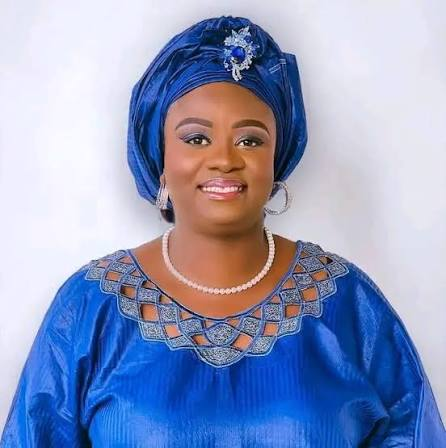
— Sylvia Blyden Drops Bombshell
By Alusine Day Break
A fresh political controversy is brewing in Sierra Leone following a strong warning attributed to former government minister and prominent political commentator Sylvia Blyden, who has raised serious concerns over a proposed Bill currently attracting public and political attention.
According to Blyden, if the Bill is passed by Parliament in its current form, the consequences could be far-reaching for Sierra Leone’s democratic and political landscape, particularly for the opposition All People’s Congress (APC).
In a statement that is likely to generate intense debate across the political divide, Sylvia is reported to have warned that the APC could find it extremely difficult to return to power if the proposed legislation becomes law.
Her warning has immediately raised questions about the real intentions behind the proposed legislation and whether it could fundamentally alter the political playing field ahead of future elections.
Manipulation to Stay in Power
Blyden’s most explosive assertion centres on her claim that those behind the proposed changes may be seeking to create conditions that would enable the ruling political establishment to remain in power for an indefinite period.
She reportedly questioned whether the proposed legislation could be part of a broader political strategy designed to strengthen the position of the governing party while weakening the chances of a future opposition victory.
Her alleged statement that “they want to stay in power forever” has added another layer of controversy to an already sensitive political debate.
If accurately reported, the remark represents a serious political accusation—not merely about the contents of the bill, but about the intentions Blyden believes may be driving the proposed legislative changes.
Warning to Parliament
The controversy now places Parliament under increased public scrutiny.
Members of Parliament are expected to carefully examine the proposed bill, its objectives, its constitutional implications and its potential impact on Sierra Leone’s democratic institutions.
For critics such as Blyden, the central question is not simply whether Parliament has the constitutional authority to pass legislation, but whether any proposed law could unintentionally or deliberately create an uneven political environment.
The opposition and civil society are therefore likely to demand greater transparency, wider public discussion and clear explanations of the provisions contained in the bill.
Could the APC’s Dream be in Danger?
The timing of the controversy is particularly significant. With Sierra Leone’s political parties already positioning themselves for future electoral battles, any legislation capable of changing the rules of political competition is bound to attract enormous attention.
The APC remains one of the country’s two major political parties and has repeatedly expressed its ambition to return to State House.
Blyden’s warning, therefore, strikes directly at the heart of the APC’s political calculations.
Her argument appears to be that if the proposed bill creates a political or electoral framework that advantages the incumbent establishment, the APC could face a dramatically altered political environment.
That possibility, whether real or perceived, could become one of the biggest political debates in the country if the bill proceeds through Parliament.
Democracy, Power and the Rules of the Game
At the centre of the debate is a much bigger question: Should laws governing political participation and democratic institutions be designed in a way that can influence the ability of one party to defeat another?
Supporters of the bill may argue that the legislation is necessary for institutional reform, improved governance or the strengthening of existing systems.
Critics, however, may interpret the same provisions differently, particularly if they believe the reforms could affect electoral competition or political succession.
That is why the contents of the Bill—and not merely political statements surrounding it will ultimately require careful examination.
Political Temperatures Rise
Blyden’s intervention is expected to intensify political discussion, particularly among APC supporters and other opposition voices that may already be suspicious of proposed changes to the country’s political and electoral framework.
The ruling side, however, would have the opportunity to explain the purpose of the legislation and reject any suggestion that it is intended to perpetuate one political party in power.
The debate should therefore move beyond accusations and counter-accusations.
Sierra Leoneans deserve to know exactly what the bill proposes, why it is being introduced, what constitutional safeguards exist, and how it could affect future elections.
The Big Question
If the legislation is passed, will it genuinely strengthen Sierra Leone’s democratic institutions—or could it change the political equation in favour of the incumbent?
That is the question now confronting lawmakers, political parties, civil society organisations and ordinary citizens.
Sylvia Blyden’s warning has thrown fuel onto an already sensitive political conversation.
Her claims that the APC may never return to power if the Bill becomes law is a prediction and political allegation that will need to be tested against the actual provisions of the legislation.
But one thing is certain: the proposed Bill has now become a political flashpoint, and every word spoken in Parliament could have consequences far beyond the walls of the Chamber.
As lawmakers prepare to consider the legislation, the public will be watching closely.