



…As Njala University’s Leadership Standoff Deepens
The governance of public institutions must always be guided by the rule of law, transparency, and accountability. These principles are the foundation of public confidence and are especially important in institutions of higher learning, where integrity and respect for legal processes should set the standard for the rest of society.
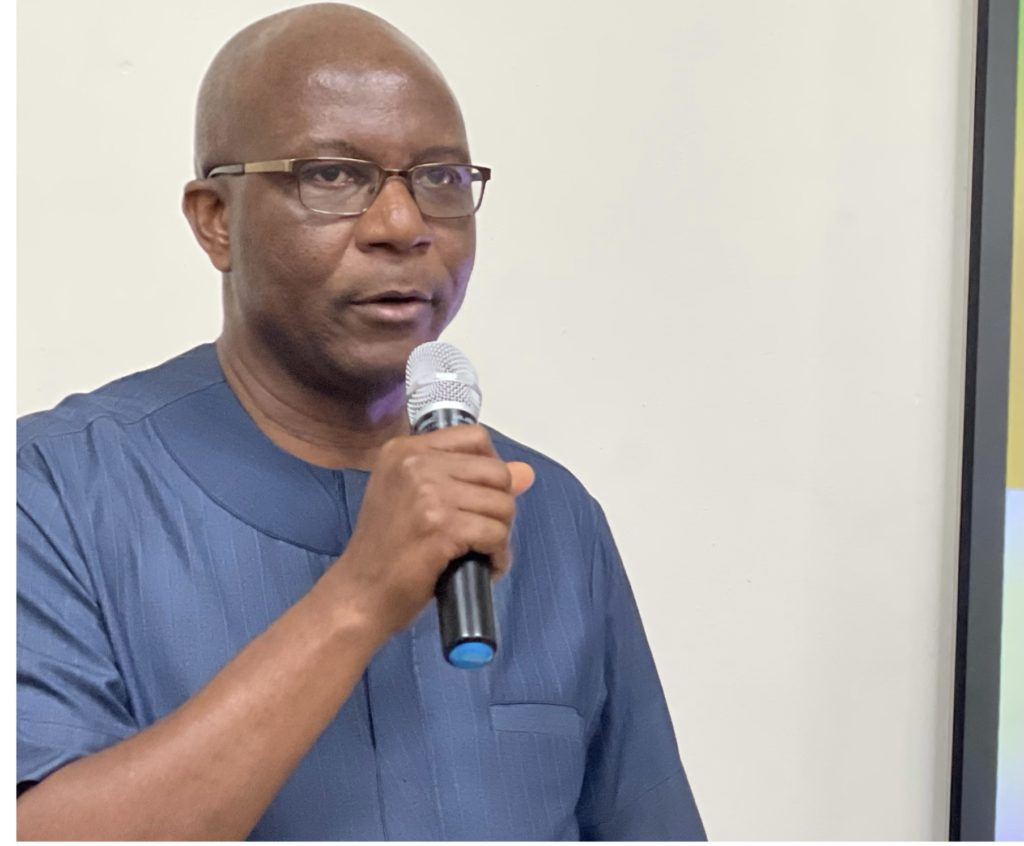
It is against this backdrop that concerns continue to be expressed regarding the continued leadership of Professor Bashiru Koroma as Vice-Chancellor and Principal of Njala University.
According to publicly available information, Professor Bashiru Koroma attained the mandatory statutory retirement age of sixty-five (65) years on 3rd March 2025. Section 15(7) of the Universities Act, 2021, provides that senior staff members of public universities retire upon attaining the age of sixty-five years. The Act also allows an extension of service only in exceptional circumstances, subject to approval by the appropriate authorities and for a clearly defined short-term period.
Following his retirement, Professor Koroma was reportedly granted a one-year extension to continue serving as Vice-Chancellor and Principal. That extension has now expired. Reports have since suggested that discussions are underway regarding the possibility of a further extension.
If those reports are anything to go with, they inevitably raise important questions about the interpretation and application of the Universities Act, 2021. Many observers believe that repeated extensions beyond the statutory retirement age could undermine both the spirit and the letter of the law, particularly where the legislation envisages exceptional and limited extensions rather than an indefinite continuation in office.
The issue extends beyond one individual. It concerns the credibility of public administration, respect for statutory limits, and the principle that no public office should be held contrary to the requirements established by Parliament.
Universities thrive when leadership transitions are conducted transparently, predictably, and in accordance with established legal procedures. Respecting retirement provisions promotes institutional renewal, creates opportunities for emerging academic leaders, and reinforces confidence that public appointments are governed by objective rules rather than discretion alone.
Many members of the university’s community and the wider public have therefore called on the relevant authorities—including the University Court, the governing bodies of Njala University, the Ministry responsible for higher education, and other competent authorities—to ensure that every decision regarding the office of Vice-Chancellor complies fully with the Universities Act, 2021.
Ultimately, this debate should not be viewed as a personal attack on Professor Bashiru Koroma or a dismissal of his years of academic and administrative service. Rather, it is a question of institutional governance and fidelity to the law. Public institutions are strengthened when legal provisions are applied consistently, irrespective of the office holder.
Those advocating for change argue that, now that the statutory retirement age has been reached and the reported one-year extension has expired, it is time for a lawful transition of leadership at Njala University. They contend that appointing new leadership through the procedures established by law would reaffirm the University’s commitment to accountability, fairness, and good governance.
The future of Njala University should be anchored in respect for the law, institutional integrity, and orderly succession. Whatever decision is ultimately taken, it should be one that is firmly grounded in the Universities Act, 2021, and capable of withstanding public scrutiny.
The enduring principle is simple: where the law prescribes retirement and limits extensions, those provisions should be applied consistently. Respect for the rule of law remains the strongest safeguard of public trust and the long-term credibility of Sierra Leone’s institutions of higher learning.