



By Ragan M. Conteh
Fifty-five women and girls have graduated as Bloodless Bondo Ambassadors at Mabalay Village in Port Loko District.
The ceremony marked another significant milestone in efforts to demonstrate that Sierra Leone’s cultural traditions can be preserved without Female Genital Mutilation (FGM).
Organised by the Amazonian Initiative Movement (AIM-SL), the Alternative Rite of Passage (ARP), popularly known as Bloodless Bondo and championed through #NenehsStrategy, seeks to retain the cultural identity, mentorship, teachings and celebration associated with Bondo while removing the cutting of women and girls.
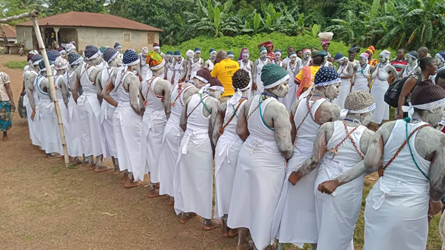
For the people of Mabalay, the occasion is more than a graduation ceremony. It represents a community-led declaration that culture can evolve without losing its meaning and that protecting women and girls does not require communities to abandon their identity.
Its central message is simple but powerful, that Bondo does not have to disappear for FGM to end.
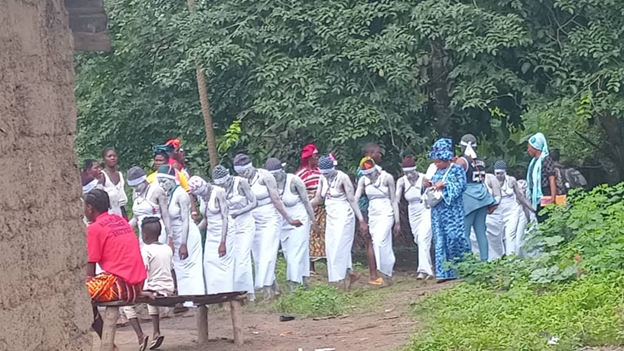
As the 55 initiates approached the culmination of their journey, Mabalay witnessed the colourful Malapra procession, one of the final cultural stages of the Alternative Rite of Passage.
Dressed in symbolic ARP attire, the initiates processed through the community amid traditional songs, celebration and expressions of solidarity before proceeding to the stream.
Within the ceremony, the journey to the stream carries cultural significance associated with cleansing, prayer, transition and preparation for a new stage of life.
What was deliberately absent, however, was the cutting.
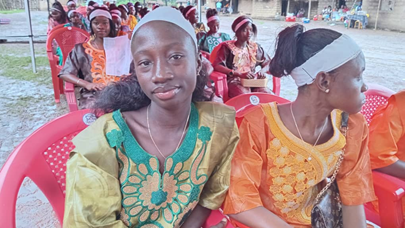
The initiates have participated in traditional teachings, rituals and ceremonies while being protected from FGM, demonstrating that initiation into womanhood can take place without inflicting irreversible injury.
Founder and Executive Director of AIM-SL, Madam Rugiatu Neneh Turay-Koroma, said the experience at Mabalay challenges the assumption that abandoning FGM means abandoning Bondo itself.
“We can preserve the teachings. We can preserve mentorship. We can preserve the songs and cultural expressions. We can preserve the wisdom of our elders and, most importantly, we can celebrate womanhood while leaving the cutting behind.”
According to Madam Turay-Koroma, culture is strongest when it protects the people entrusted with carrying it into the next generation.
She said the Bloodless Bondo initiative demonstrates that meaningful cultural transformation is possible through respectful dialogue, education, community ownership and partnership rather than simply condemning communities or dismissing their traditions.
This approach is particularly significant in Sierra Leone, where Bondo carries deep social and cultural meaning in many communities but where FGM continues to raise serious concerns about the health, bodily autonomy, dignity and protection of women and girls.
AIM-SL’s model seeks to separate the valued cultural and educational elements of Bondo from the harmful act of cutting.
For the organisation, ending FGM therefore does not have to mean erasing culture. It means allowing culture to evolve in ways that protect life, health and dignity.
The 55 graduates are not only completing an Alternative Rite of Passage. AIM-SL hopes they will become ambassadors for a new generation of girls who can celebrate their culture without being subjected to FGM.
Their participation also reflects the importance of involving families and entire communities in changing deeply rooted social practices.
Madam Turay-Koroma paid tribute to the parents, fathers, mothers and families who entrusted their daughters to the programme, as well as the traditional authorities and elders of Mabalay who supported the process.
She particularly commended the Soweis, Bondo practitioners and cultural custodians who have embraced the possibility of maintaining their cultural roles while abandoning cutting.
Their involvement, she said, is crucial because sustainable change cannot be imposed from outside. It must include the people who understand, practise and transmit the culture.
AIM-SL also acknowledged FGM survivors and girls and women who have not undergone FGM, whose voices and experiences continue to shape the movement for change.
The organisation stressed that survivors should not be shamed or silenced for speaking about their experiences. Their testimony can help communities understand the consequences of FGM and create safer choices for future generations.
The Mabalay initiative also recognises the role of men and boys. Husbands, fathers, community leaders, young people and other residents have been engaged because protecting girls cannot remain the responsibility of women alone.
Ending FGM requires communities to question harmful expectations collectively and create an environment in which families can choose not to cut their daughters without fear of exclusion or stigma.
The experience in Mabalay reinforces one of the central principles behind #NenehsStrategy: ending FGM is not simply about telling communities what they must abandon but it is about listening, dialogue and providing a safe alternative.
And, critically, it is about building sufficient trust for communities themselves to become agents of change.
The programme has therefore combined cultural engagement with community sensitisation, advocacy and partnership to demonstrate that tradition and the protection of girls do not have to exist in opposition to one another.
AIM-SL expressed appreciation to the Mabalay community, the Ministry of Gender and Children’s Affairs and other government stakeholders, the Forum Against Harmful Practices (FAHP) and its member organisations, civil society partners, traditional and religious leaders, community champions and development partners who contributed to the initiative.
The organisation also acknowledged support associated with BMZ, N’NINKIE and Irish Aid for efforts advancing the Alternative Rite of Passage and the protection of women and girls.
During the final graduation, the initiates have already undergone the traditional “wash hands” ritual, with the Lukneh ceremony forming part of the concluding stages before they emerge as graduates of the Bloodless Bondo.
For AIM-SL, their graduation represents both an ending and a beginning.
It is the conclusion of an initiation journey, but it also marks the emergence of 55 women and girls who can demonstrate to other communities that there is another way.
AIM-SL says it will continue working with communities, Soweis, survivors, traditional authorities, government institutions and partners to advance Alternative Rites of Passage and campaign for the elimination of FGM and other harmful practices.
The organisation remains committed to community engagement, survivor-centred advocacy, public education, policy reform and stronger partnerships aimed at protecting women and girls.
The message emerging from Mabalay is therefore one of possibility rather than cultural loss:
Culture can evolve. Tradition can be preserved. Bondo can be celebrated. And women and girls can be protected.
For the 55 new Bloodless Bondo Ambassadors, that change has already begun.