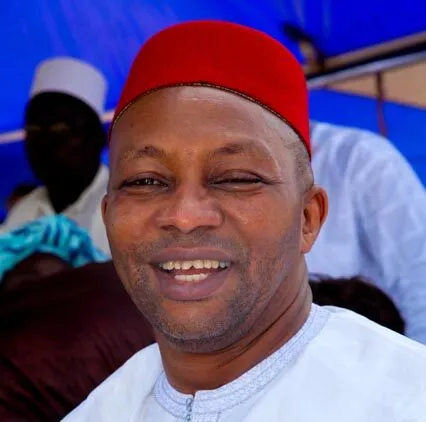


Acting Leader of the Opposition, Hon. Daniel Koroma, has called on the government to prioritise agricultural mechanisation, mineral value addition and energy development to ensure that Sierra Leone benefits meaningfully from its international agreements.
Speaking in Parliament during deliberations on a proposed bilateral agreement, Hon. Koroma said the agreement could create opportunities for technology transfer, knowledge sharing and cooperation in agriculture, mining, energy and other sectors.
He however, cautioned that Sierra Leone must strengthen its technical and institutional capacity to avoid a situation where foreign partners benefit more from the agreement because of their superior technology and resources.
Focusing on agriculture, the opposition lawmaker advised the Minister of Agriculture to make mechanisation, particularly in rice farming, a national priority, arguing that it remains one of the most effective ways to achieve food sufficiency.
He observed that unlike previous generations, many young people today are no longer interested in subsistence farming, making it necessary for the government to introduce modern agricultural equipment to attract them into the sector.
According to him, Sierra Leone has struggled to overcome hunger since independence, partly because farming continues to depend heavily on manual labour.
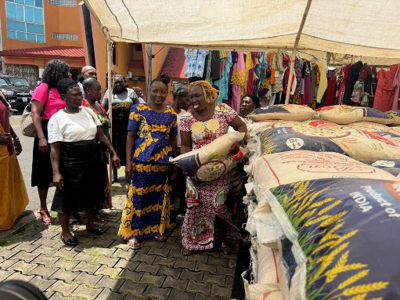
He cited India’s agricultural experience, noting that mechanised farming enables individual farmers to cultivate larger areas with less human effort.
Hon. Koroma further recommended the introduction of smaller and more adaptable harvesters suitable for Sierra Leone’s inland valley swamps and other difficult farming environments, rather than relying exclusively on large machines that may not be suitable for local terrain and road conditions.
On the economic implications of the agreement, he expressed concern about provisions relating to customs duties and charges, warning that such arrangements should not undermine the government’s ability to introduce new fiscal measures through annual Finance Acts.
He urged the Minister of Finance to clarify whether the agreement could restrict the National Revenue Authority’s ability to adjust customs duties and other charges in response to emerging economic opportunities.
The opposition lawmaker also raised concerns about Sierra Leone’s limited capacity to take advantage of opportunities in minerals, maritime resources and airspace under the agreement.
Turning to the mining sector, he questioned why the country continued exporting raw minerals without sufficient local processing and value addition.
He argued that reliable electricity generation was essential to establishing industries capable of processing iron ore and other mineral resources locally, thereby creating employment and increasing government revenue.
Hon. Koroma maintained that although the agreement presented opportunities for both countries, Sierra Leone must improve its technological and productive capacity to avoid receiving only a small share of the potential benefits.
He concluded that the success of the agreement would ultimately depend on how effectively the government negotiated, implemented and utilised its provisions in the national interest.