


Citizens Demand Answers
2023 Elections Controversies Not Yet Over
By Daybreak Newspaper Team
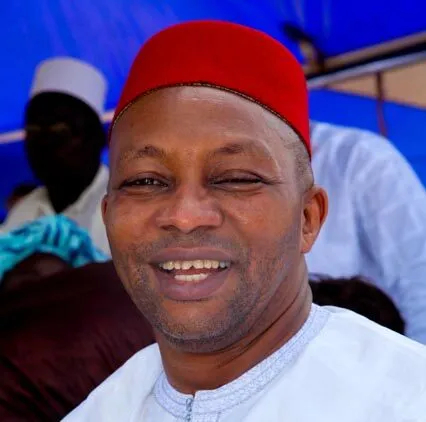
Former Minister and senior opposition politician Hon. Kemoh Sesay has raised serious questions over the conduct of the Electoral Commission of Sierra Leone (ECSL), accusing the electoral management body of acting in a manner he argues is inconsistent with the Constitution and the principles governing the declaration of election results.
The controversy follows the announcement of approximately 40 percent of election results while results from the Northern Region had reportedly not yet been counted or incorporated. Hon. Kemoh Sesay has questioned the legal and constitutional basis for such an announcement, arguing that every region and constituency must be properly accounted for before the Commission presents the national picture of an election.
According to Hon. Sesay, the issue is not simply about the percentage of votes announced, but about the constitutional responsibility of the electoral authority to ensure that election results are processed, verified and declared in accordance with the law.
“Where Is The North?”
Hon. Kemoh Sesay’s intervention has brought renewed public attention to the importance of transparency, accuracy and inclusiveness in the electoral process.
He has challenged the ECSL to explain how it arrived at the 40 percent figure at a time when results from the North were allegedly still outstanding. For him, the central question is whether it is appropriate to communicate a national percentage before results from all relevant parts of the country have been properly counted and verified.
The concern is particularly significant because election results are highly sensitive. Even preliminary figures can influence public perception, political expectations and the confidence of citizens in the electoral process.
Hon. Sesay therefore wants the ECSL to provide a clear explanation of the methodology used in calculating the announced percentage and to demonstrate that the process complied with the Constitution and applicable electoral laws.
Constitutional Compliance under the Spotlight
At the heart of the controversy is the question of constitutional compliance.
Hon. Kemoh Sesay maintains that the ECSL must operate strictly within the powers and procedures provided by the Constitution and electoral legislation. His argument is that no electoral institution should be seen as operating outside the legal framework, particularly when handling the announcement and declaration of election results.
The former minister’s position has also triggered wider discussion about the distinction between announcing partial results, publishing provisional figures and formally declaring final results.
While an electoral commission may have procedures for releasing results as they are received and verified, the public must be able to understand exactly what a percentage represents, which areas have been included, which areas remain outstanding and whether the figures are subject to further verification. For many citizens, clarity is essential.
ECSL Urged to Give the Public Answer
Hon. Sesay is effectively calling on the electoral commission to provide answers rather than leave room for speculation.
Among the questions arising from his intervention are: What exactly did the announced 40 percent represent?
Which regions and constituencies had been included in the calculation?
Had the Northern Region’s results been counted, verified or excluded at the time of the announcement?
What legal provision guided the ECSL’s decision?
Were political parties and stakeholders adequately informed about the methodology?
What safeguards were in place to ensure that the public was not given a misleading impression of the overall electoral picture?
These questions, if left unanswered, could fuel unnecessary suspicion at a time when confidence in electoral institutions is crucial.
Transparency Must Come First
The credibility of any election does not depend only on the final winner. It also depends on whether citizens, political parties and observers believe that the process was transparent, accountable and conducted according to established rules.
Hon. Kemoh Sesay’s criticism therefore goes beyond political competition. His intervention has placed the spotlight on the broader principle that electoral institutions must be trusted by all sides.
Where questions arise, the best response is not silence but transparency.
The ECSL, as the country’s electoral management body, has a responsibility to explain its procedures clearly and reassure the public that every vote is properly accounted for before final conclusions are drawn.
Political Stakes are High
The controversy comes against a backdrop of intense political debate in Sierra Leone, where questions surrounding electoral administration, constitutional interpretation and the credibility of election processes remain highly sensitive.
Opposition parties and other stakeholders have repeatedly stressed the need for greater transparency in electoral processes, while electoral authorities have the difficult responsibility of administering elections under complex legal and logistical circumstances.
Against this background, Hon. Kemoh Sesay’s challenge is likely to generate further debate among political parties, constitutional lawyers, civil society organisations and ordinary voters.
The issue is therefore one that deserves careful examination based on the Constitution, electoral laws and the actual procedures used by the ECSL.
A Call for Clarity, Not Confusion
The fundamental demand coming from Hon. Kemoh Sesay is straightforward: the ECSL must explain itself.
If the Commission acted within the law, it should be able to clearly demonstrate the legal and procedural basis for announcing the 40 percent figure.
If the figure was only a preliminary statistical update that too should be clearly communicated so that citizens understand that it does not constitute a final result.
And if any procedural mistake occurred, stakeholders deserve to know what corrective measures will be taken.
Ultimately, elections belong to the people. Political parties contest them, candidates compete in them and electoral institutions administer them — but the legitimacy of the outcome depends heavily on public confidence.
Hon. Kemoh Sesay’s intervention has therefore reopened an important national conversation: Can an electoral body announce a national percentage before all parts of the country, including the North, have been properly counted and verified?
That question now demands a clear, factual and legally grounded response from the ECSL.
Until that explanation is provided, the debate over the legality, transparency and constitutional propriety of the 40 percent announcement is unlikely to disappear.