





Every tablet swallowed, every injection administered and every bottle of syrup dispensed in Sierra Leone begins a journey long before it reaches a hospital, pharmacy or medical store. That journey starts at the nation’s ports, where a rigorous inspection process serves as the country’s first line of defense against counterfeit, substandard and illegal medicines.
Unlike ordinary cargo, pharmaceutical imports undergo one of the most comprehensive examination procedures at the Queen Elizabeth II Quay. The process is not intended to create obstacles for legitimate importers; rather, it is designed to protect millions of Sierra Leoneans from medicines that could endanger lives if allowed into circulation unchecked.
Health experts worldwide agree that counterfeit and falsified medicines remain one of the greatest threats to public health, particularly in developing countries where criminal networks often exploit weak regulatory systems. Such medicines may contain the wrong ingredients, insufficient active substances or dangerous chemicals capable of causing treatment failure, severe illness or even death.
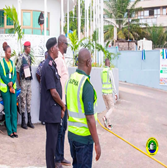
Recognizing these risks, Sierra Leone has adopted a coordinated inspection regime in which pharmaceutical consignments (more so those flagged, intelligence wise) are subjected to 100 percent examination before release. The exercise is jointly undertaken by the Sierra Leone Ports and Harbours Authority (SLPHA), the Pharmacy Board of Sierra Leone, the National Revenue Authority, the Transnational Organized Crime Unit (TOCU) of the Sierra Leone Police (SLP), Standards Bureau, and other relevant stakeholders.
The examination goes way beyond checking paperwork. Officials physically inspect consignments to verify that medicines correspond with shipping documents, confirm their authenticity, identify prohibited or controlled substances, and ensure that imported products comply with national laws and internationally accepted pharmaceutical standards.
The meticulous process has repeatedly proven its value. In one recent operation, officials conducting a routine 100 percent examination uncovered cartons of counterfeit medicines concealed within a container. Half way through 2026, the Authority and other state apparatus have intercepted hundreds of cartons containing illegal drugs (mostly tramadol) and other substances, courtesy of these examinations. Had those products escaped detection, they could have entered pharmacies, health facilities and communities across the country, placing countless lives at risk. Such discoveries reinforce why comprehensive inspections remain an indispensable component of Sierra Leone’s public health protection strategy.
While these examinations require time and coordination, authorities maintain that they should never be viewed merely as administrative procedures. Instead, they represent a deliberate investment in safeguarding human life. A few additional hours spent verifying pharmaceutical cargo can prevent dangerous medicines from reaching thousands of unsuspecting patients. The examination process is also conducted within a secure operating environment. Cargo movement and inspection at the Queen Elizabeth II Quay are supported by trained security personnel, extensive CCTV surveillance and the collaborative presence of multiple state agencies. Aside the trained and qualified port security personnel, there are private security persons manning container section and other areas, ensuring that cargo of importers are safe and secured. These layered security arrangements help preserve the integrity of consignments while minimizing opportunities for theft, tampering or unauthorized access.
Like many growing ports across the region, the Queen Elizabeth II Quay continues to experience periods of congestion. Industry experts attribute this largely to increasing cargo volumes driven by improved vessel turnaround times and expanding trade activity, coupled with the physical limitations of existing port space. Nevertheless, operational measures are implemented daily to improve cargo flow and reduce congestion while ensuring that critical regulatory and security procedures are never compromised.
For the agencies responsible for border protection and public health, striking the right balance between trade facilitation and regulatory enforcement remains essential. Faster clearance is an important objective, but it cannot come at the expense of public safety.
As Sierra Leone continues to strengthen its health and trade systems, the inspection of pharmaceutical imports remains one of the country’s most effective safeguards against counterfeit drugs, illegal pharmaceuticals and other dangerous products. It is a quiet but vital process that rarely attracts public attention, yet it plays a decisive role in ensuring that the medicines reaching hospitals, pharmacies and households are safe, genuine and fit for human consumption.
In the end, the objective is simple: protecting commerce is important, but protecting lives is indispensable. Every pharmaceutical container thoroughly examined at the nation’s seaport is another step towards ensuring that the medicines Sierra Leoneans depend on for their health are exactly what they are meant to be.