
President Bio Was Not Defeated
By Alusine Daybreak
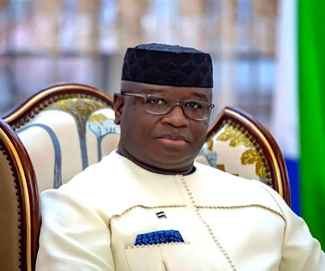
Recent discussions on social media and in political circles have generated misleading claims suggesting that President Dr. Julius Maada Bio was “defeated” or voted out as Chairman of the Economic Community of West African States (ECOWAS). Such claims do not reflect how the ECOWAS Chairmanship works.
The position of ECOWAS Chairman is not a permanent office, nor is it generally a post that leaders hold indefinitely. Instead, it follows an established tradition in which the Chairmanship is held by a serving Head of State or Government for approximately one year, after which another leader is selected by consensus during an ECOWAS Summit.
President Julius Maada Bio successfully served his tenure as Chairman, presiding over one of the most challenging periods in the sub-region’s recent history. During his leadership, ECOWAS continued to grapple with political transitions, constitutional governance, regional security concerns, economic cooperation, and efforts to strengthen unity among its member states.
Understanding the ECOWAS Rotation System
The ECOWAS Chairmanship is rotated among Heads of State and Government of member countries. While there is no rigid alphabetical or automatic sequence, member states generally agree through consultation and consensus on which leader should assume the Chairmanship at the end of the incumbent’s one-year tenure.
This rotational arrangement ensures that different member states have the opportunity to provide leadership and contribute to advancing the regional body’s objectives. The outgoing Chairman traditionally hands over responsibilities to the incoming Chairman at an ECOWAS Summit after completing the agreed term.
Consequently, a change in Chairmanship should not be interpreted as an election defeat or a rejection of the outgoing leader. Rather, it is part of the organization’s established governance framework aimed at promoting inclusiveness, shared responsibility, and regional balance.
Bio’s Year of Regional Leadership
Throughout his tenure, President Bio chaired several important meetings involving regional peace and security, democratic governance, economic integration, and diplomatic engagement. His leadership came at a time when West Africa faced multiple challenges, including security threats, political instability in parts of the region, and efforts to strengthen cooperation among member states.
His administration also hosted the ECOWAS Summit in Sierra Leone, bringing regional leaders, diplomats, and international partners to the country. The summit showcased Sierra Leone’s capacity to host major international events and highlighted the country’s role in regional diplomacy.
Why the Rotation Matters
The annual rotation of the ECOWAS Chairmanship is designed to strengthen collective ownership of the regional organization. Every Chair is expected to build on the work of predecessors while preparing the ground for the next leader to continue advancing ECOWAS priorities.
This system has helped preserve unity within the bloc by ensuring that leadership responsibilities are shared rather than concentrated in one country or one individual. It also reflects the principle that ECOWAS is a community of sovereign member states working together to address common challenges.
Separating Facts from Political Narratives
Political commentary often seeks to portray routine institutional changes as political victories or defeats. However, in the case of the ECOWAS Chairmanship, the end of President Bio’s tenure represents the normal conclusion of an annual leadership cycle.
It is therefore inaccurate to describe the transition as President Bio being “defeated.” His tenure concluded in accordance with the ECOWAS tradition of rotating the Chairmanship among member states. The incoming Chair assumes responsibility for the next phase of the organization’s work while the outgoing Chair returns to focusing on national leadership.
As ECOWAS continues pursuing regional peace, economic integration, democratic governance, and cooperation, the annual rotation of its Chairmanship remains one of the organization’s key traditions, ensuring continuity, shared leadership, and collective responsibility among West African nations.