


The Government of Sierra Leone is being urged to treat the ongoing Kent Harbour Project as a national strategic investment by ensuring that its financial commitments under the concession agreement are honoured without delay, while also considering measures to address the country’s prohibitively high commercial bank interest rates, which many believe are discouraging local investment and slowing transformative infrastructure development.
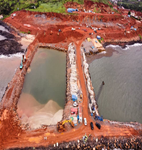
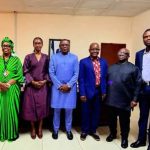
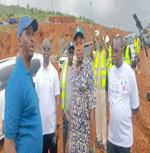
The call gained renewed momentum during a high-profile inspection visit to the Gento Group’s Kent Harbour Project by Chief Minister Dr. David Moinina Senge, who was accompanied by the Minister of Transport and Aviation, Fanday Turay Esq., Deputy Minister of Transport and Aviation Rex Bhonapha, Permanent Secretary Kwame Yankson and the Harbour Master at the Sierra Leone Ports and Harbours Authority (SLPHA), Alpha Yayah Bangura.
The delegation was received by the Chief Executive Officer of the Gento Group of Companies, Mohamed Gento Kamara, who conducted the officials around the massive construction site while outlining the strategic importance of the project to Sierra Leone’s economic future.
Speaking during the tour, Mohamed Gento Kamara explained that the concession agreement with the Government covers both the Banana Island Deep-Sea Transshipment Port and the Kent Harbour Project, with Kent serving as a secondary concession port to support the larger transshipment facility at Banana Island.
According to him, the Kent Harbour will significantly reduce congestion at the Queen Elizabeth II Quay in Freetown by handling cargo destined for various parts of the country and neighbouring West African states.
“When completed, we expect to handle at least two ships simultaneously,” Gento Kamara disclosed. “The project is capital intensive, and government support will help us speed up construction.”
He noted that the harbour can currently accommodate vessels with draughts of up to eight metres, while dredging works are planned to increase the depth to between ten and twelve metres, allowing larger commercial vessels to berth safely.
He further disclosed that the US$75 million project has already consumed approximately US$30 million of private investment, leaving an estimated US$45 million still required to complete the development.
Despite the enormous financial burden, Gento Kamara expressed confidence that by December significant portions of the harbour would be completed and ready to receive the first commercial vessels.
Beyond cargo handling, he explained that the Kent Harbour will also serve as a transport gateway for tourists travelling to Banana Island, thereby strengthening Sierra Leone’s growing tourism sector while opening new opportunities for hospitality and related businesses.
The project currently employs approximately 600 Sierra Leoneans, with expectations that thousands of additional direct and indirect jobs will be created during both the construction and operational phases.
Industry observers argue that such a nationally significant investment deserves stronger government backing, particularly at a time when local investors continue to face extremely high commercial lending rates that substantially increase project costs.
Many business leaders believe that while foreign investment remains important, Sierra Leone must equally create an enabling financial environment for indigenous investors willing to commit substantial private capital to strategic national infrastructure.
There is growing sentiment that government counterpart funding, where already provided for under concession arrangements, should be released promptly to avoid unnecessary construction delays and reduce financing costs arising from expensive commercial borrowing.
The Harbour Master at the Sierra Leone Ports and Harbours Authority, Alpha Yayah Bangura, confirmed that the Authority had approved the project’s design after rigorous technical assessments.
He described Kent as an ideal location for cargo operations while highlighting Banana Island’s exceptional natural depth, estimated at approximately 22 metres, which could comfortably accommodate some of the world’s largest cargo vessels.
According to him, the deep-water advantage would enable larger international shipping lines, including those operating from Asia, to call directly at Sierra Leonean ports, increasing cargo volumes while reducing freight costs for importers and exporters throughout Sierra Leone and the wider sub-region.
Minister of Transport and Aviation, Fanday Turay Esq., praised Mohamed Gento Kamara for demonstrating that Sierra Leonean entrepreneurs are capable of delivering projects of international standard.
He noted that the country has recently experienced congestion challenges at the Queen Elizabeth II Port and expressed confidence that the Kent Harbour would substantially improve cargo movement while facilitating trade across West Africa.
“We have goods destined for neighbouring countries, and this project will improve the handling of containers for regional trade,” the Minister said.
He further disclosed that Government has an equity stake of ten per cent in the project and reaffirmed its commitment to supporting the initiative.
Describing the development as a legacy project, Minister Turay said he was proud to witness a Sierra Leonean undertaking such an ambitious investment, adding that after Kent, the Gento Group would proceed with the larger Banana Island Transshipment Port, which possesses one of Africa’s deepest natural harbours.
Harbour Master Alpha Yayah Bangura also emphasised that SLPHA has remained actively involved throughout the planning process and believes the project represents a significant opportunity for Sierra Leone to unlock the full potential of its blue economy.
He noted that between 30 and 45 per cent of cargo currently entering Freetown is ultimately destined for provincial communities, making Kent an ideal alternative port capable of reducing pressure on existing port infrastructure while improving cargo distribution nationwide.
For his part, Mohamed Gento Kamara reiterated that the project is not merely a private business venture but a national development initiative designed to create employment, industrialise the country, expand tourism and transform Sierra Leone into a regional investment destination.
He announced plans to commence granite exports by December while expressing optimism that the harbour’s first shipment would also begin before the end of the year, subject to completion of critical construction works.
He appealed to Sierra Leoneans to embrace the project as a national asset and called on Government to fulfil its financial obligations under the concession arrangement, stressing that such support would accelerate completion and maximise long-term economic returns.
“The natural 22-metre depth at Banana Island represents an enormous national advantage,” he said. “If fully developed, it will generate significant revenue and position Sierra Leone as one of West Africa’s leading maritime and logistics hubs.”
The Kent Harbour Project has already attracted visits from President Julius Maada Bio, the leadership of Parliament and several senior government officials, all of whom have commended the initiative as one capable of reshaping Sierra Leone’s maritime sector.
As the project advances, many economic observers argue that the success of Kent Harbour could become a defining example of productive collaboration between government and indigenous private enterprise. They contend that timely counterpart funding, coupled with policies aimed at reducing the burden of excessively high bank lending rates, would not only accelerate the completion of the harbour but also send a powerful signal that Sierra Leone is committed to nurturing local investors capable of delivering transformational infrastructure for national development.