

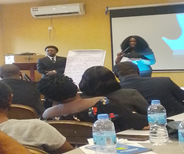
The Ministry of Justice, in collaboration with the Justice Sector Coordination Office (JSCO), with support from UNICEF, has held a Capacity-Building and Policy Consultation Workshop on Female Genital Mutilation (FGM) on Thursday, 22nd July 2026, at the Civil Service Training College.
The workshop brought together key stakeholders to examine the current state of the practice, review existing policies and legal frameworks, and identify practical measures to strengthening national efforts to address the issue.
The workshop, which took place simultaneously in Makeni, Bo, and Freetown, provided a platform for state Prosecutors and Police/Investigators to engage in meaningful dialogue on the prevalence, trends, and challenges associated with FGM.
Presentations highlighted the current situation across the country, outlining progress made as well as persistent challenges in efforts to eliminate the practice. Participants also received an overview of the existing FGM policy and legal framework, followed by discussions on its implementation, effectiveness, and areas requiring improvement. Representatives from the different venues shared their experiences, current practices, and emerging concerns, providing valuable insights into the realities faced within their respective jurisdictions.
As part of the programme, participants worked in groups to identify policy gaps and prioritise key areas for reform. Each group presented its findings during a plenary session, where robust discussions were held to refine recommendations and build consensus on the way forward.
The workshop further featured consultations on major policy issues, resulting in broad agreement on several priority areas and the development of emerging recommendations aimed at strengthening the national response to FGM through improved policies, legal reforms, community engagement, and stakeholder collaboration.
In his closing remarks, the Attorney General and Minister of Justice, Hon. Alpha Sesay, Esq., commended participants for their active engagement and valuable contributions throughout the workshop, reaffirming Government’s commitment to inclusive policy development, the protection of the rights and dignity of women and girls, and continued collaboration with stakeholders including JSCO and UNICEF to ensure that future policies effectively respond to the challenges surrounding Female Genital Mutilation.
The workshop concluded with a renewed commitment from participants, including state Prosecutors and Police/Investigators, to support ongoing consultations and contribute towards the development of stronger policies and coordinated interventions to address FGM in Sierra Leone.