



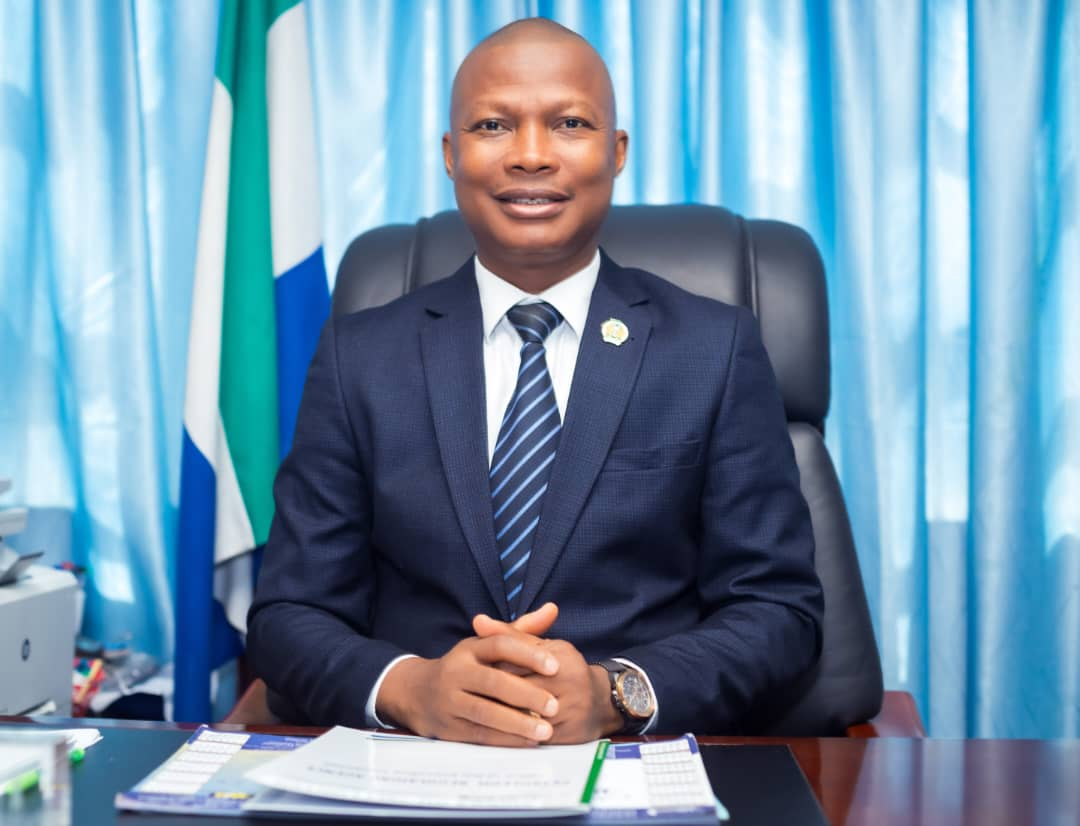
-Baluwa Koroma
By Musa Conteh
Mr. Baluwa Koroma, Director General of the National Petroleum Regulatory Authority, has delivered an update on the country’s fuel situation during the weekly press conference held at the Miata Civic Center.
He emphasized on the global nature of the current petroleum challenges and the government’s ongoing efforts to maintain stability.
Koroma noted that the petroleum sector remains a critical driver of every economy, affecting both oil-producing and net-importing countries. He acknowledged that Sierra Leone, like many other nations, continues to feel the impact of rising global fuel prices driven by external factors such as supply disruptions, international conflicts, and market volatility.
Despite these pressures, he commended the government’s efforts in managing the situation through subsidies. ‘’Government has been subsidizing petroleum products,’’ he said.
Baluwa stated that fuel supply and pricing have remained relatively stable compared to several countries across Africa, where high inflation and fuel costs have triggered protests and strikes.
Providing key figures, Koroma revealed that petrol prices have increased by approximately 78.9%, while diesel has risen by over 100% since the start of the crisis. He explained that although international fuel prices may begin to decline, local adjustments are usually gradual due to existing supply costs and procurement timelines.
He further disclosed that supply challenges persist, with import volumes sometimes falling short of expectations due to high global prices. However, he assured the public that the government continues to take proactive steps to ensure availability across the country, including remote areas.
The NPRA boss outlined several measures implemented by the government and the regulatory authority, including strengthening the price stabilization mechanism, improving the pricing formula, increasing monitoring of petroleum distribution, and enhancing transparency in public communication.
He also highlighted the important role of the media in supporting national stability, urging journalists to provide accurate and responsible reporting to prevent misinformation that could heighten public tension during such crises.
Looking ahead, the Director General stressed the need for stronger institutional frameworks, improved efficiency, and better preparedness to withstand future global shocks such as pandemics and geopolitical conflicts.
He concluded by reaffirming the government’s commitment to ensuring a steady fuel supply while maintaining transparency and public trust in the management of the petroleum sector.