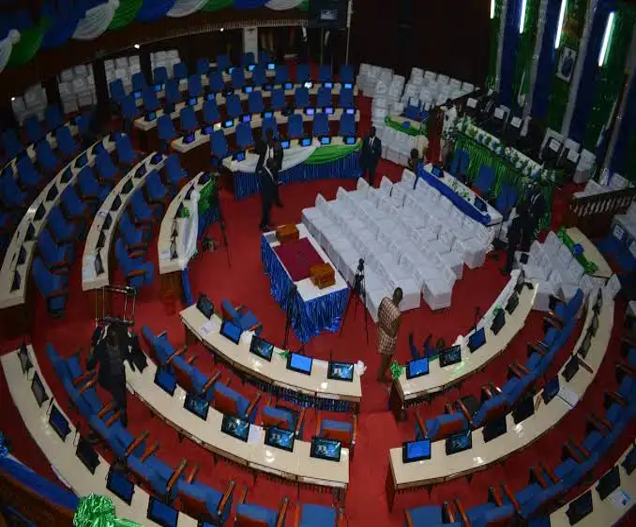





In a defining moment for Sierra Leone’s democratic journey, Parliament has passed into law the landmark Constitutional Amendment Bill, marking a significant victory for governance reform and institutional strengthening. The Bill, which underwent exhaustive committee and third reading stages, was put to a vote on Monday, August 10th, culminating in a resounding affirmation of the nation’s commitment to deepening its democratic credentials.
The voting results tell a compelling story of democratic consolidation. The ruling Sierra Leone People’s Party (SLPP), alongside parliamentary chiefs and two courageous members from the opposition All People’s Congress (APC), formed a formidable coalition that delivered a crushing defeat to the opposition’s position, with 97 votes against 46. While the APC staged a walkout after realizing the futility of their opposition, notably to an amendment they themselves initiated back in 2017, the remaining members demonstrated remarkable statesmanship by staying to pass all recommended amendments, including the final bill.
This walkout, rather than undermining the process, actually highlighted the robustness of Sierra Leone’s democratic institutions, where debate is vigorous but ultimately yields to the will of the majority as expressed through proper parliamentary procedure.
The constitutional amendments represent a significant leap forward for Sierra Leone’s political architecture. Among the most transformative provisions, the Proportional Representation system and the 50+1 requirement for presidential elections sailed through, ensuring that future elections will more accurately reflect the will of the people and enhance political stability.
In a move that balances inclusivity with institutional integrity, the amendments now permit dual citizens to contest parliamentary seats and serve as ministers, a progressive step that harnesses the expertise and resources of Sierra Leoneans abroad. However, the amendments wisely maintain certain safeguards by excluding dual citizens from serving as Speaker, Deputy Speaker, or acting President, ensuring the highest offices remain firmly rooted in unquestionable national allegiance. Also, for them to qualify to run as such or serve, they must be resident in the country for at least 24 months.
The legislative process demonstrated maturity through its willingness to refine initial proposals. Notably, the Search Committee for the position of Chief Electoral Commissioner reverted to the old format, a testament to Parliament’s commitment to getting institutional details right rather than simply pushing through predetermined changes.
Perhaps most significantly, the amendments have now been referred to the Supreme Court for interpretation within three months, providing an essential constitutional check that underscores the rule of law and institutional accountability.
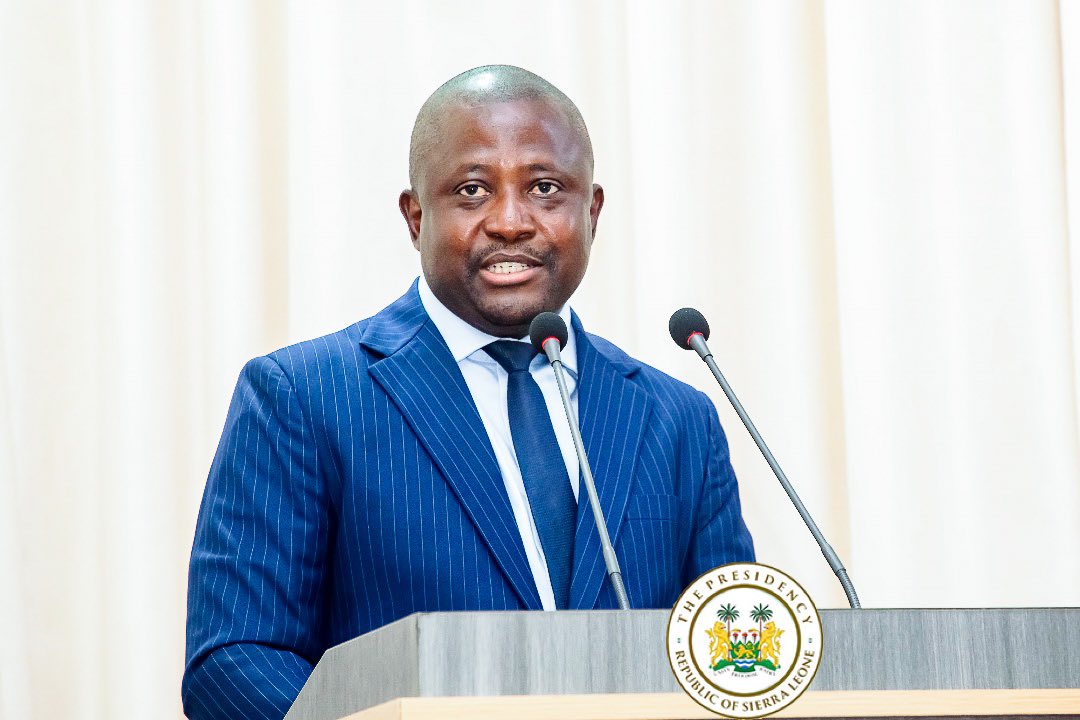
President Julius Maada Bio deserves particular praise for his leadership in concluding a constitutional reform process that predates his presidency. While the APC initiated these amendments in 2017, it is President Bio’s administration that demonstrated the political will and legislative skill to see them through to completion. This achievement reflects a leader who prioritizes national progress over partisan point-scoring, willing to advance reforms initiated by political opponents when they serve the national interest.
The administration has consistently framed constitutional reform as essential to enhancing democratic governance and aligning with Sierra Leone’s broader national development vision. The inclusion of constitutional reform as a core pillar of the government’s agenda demonstrates a clear-eyed understanding that institutional strengthening is fundamental to sustainable development.
This constitutional milestone reinforces Sierra Leone’s reputation as a growing democracy in West Africa. The reforms establish mechanisms for more inclusive elections, clearer succession protocols, and enhanced governance accountability. By allowing diaspora engagement through dual citizenship provisions while maintaining institutional integrity, Sierra Leone is crafting a modern governance framework that learns from global best practices while respecting local realities.
The Supreme Court referral further cements Sierra Leone’s commitment to constitutionalism and judicial independence. The three-month review period provides adequate time for thorough legal scrutiny while maintaining momentum towards implementation.
As Sierra Leone moves forward with these constitutional reforms, the nation stands at an inflection point. The amendments represent not just legal changes but a collective aspiration for more responsive, accountable, and representative governance. The passage of this Bill demonstrates that when political will and national interest align, transformative change is possible.
President Bio’s administration has now delivered on a critical governance reform that will shape Sierra Leone’s political landscape for generations to come. By completing a process that began under the previous administration, the President has shown that governance is about continuity and national progress, not narrow partisan advantage. This is the hallmark of mature leadership and democratic deepening.
As the Supreme Court prepares to interpret the amendments and implementation begins, Sierra Leoneans can take pride in a parliamentary process that, despite its tensions, ultimately served the national interest. The constitutional reforms of 2026 will undoubtedly be remembered as a watershed moment in the nation’s democratic evolution – one that positions Sierra Leone as a beacon of democratic progress in the region.