
…As Model-Circular Road Turns Death Trap
By Daybreak Team
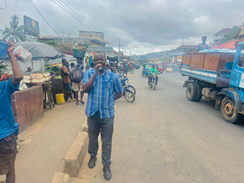
The Sierra Leone Roads Authority (SLRA) is coming under increasing public pressure as residents, commercial drivers, passengers and other road users continue to raise serious concerns over the deplorable condition of roads across Freetown, particularly the Model Circular Road and its surrounding areas.
For many residents and daily commuters, what should be a vital road network serving communities and connecting different parts of the capital has increasingly become a source of frustration, danger and anxiety. The deteriorating condition of some sections of the road has raised questions about road maintenance, drainage, rehabilitation and the level of attention being given to critical infrastructure within the city.
The situation has become so concerning that Truth Media has repeatedly called on the relevant authorities, including the SLRA, to take urgent and decisive action, particularly regarding the troubled bridge along the Model Circular Road.
A Serious Public Concern
Residents and passengers using the Model Circular Road say the condition of the road is no longer something that can simply be ignored or treated as an ordinary inconvenience.
According to concerns being raised by road users, damaged sections, potholes, deteriorating surfaces and problems around the bridge are creating difficult conditions for motorists and pedestrians. During periods of heavy rainfall, the situation can become even more challenging, with water, mud and damaged road surfaces making movement increasingly difficult.
For passengers, the problem is not merely about comfort. It is about safety.
Drivers are forced to slow down dramatically at certain sections, while others attempt to maneuver around damaged areas. Such movements can create additional risks, particularly where pedestrians, motorcycles, taxis and other vehicles are competing for limited safe space.
The bridge itself has become a major point of concern, with residents describing the situation as potentially dangerous and calling for immediate intervention before a serious tragedy occurs.
‘‘Don’t Wail For A Tragedy’’-Residents Warn
The growing public concern can be summed up in one simple message: authorities should not wait for lives to be lost before acting.
A road infrastructure problem can quickly become a public safety emergency when deterioration is allowed to continue unchecked.
Residents argue that preventive maintenance is far better than waiting until a bridge collapses, a vehicle crashes, or pedestrians suffer serious injuries.
They are therefore calling on the SLRA and other relevant authorities to inspect the affected areas, identify the immediate dangers and undertake the necessary rehabilitation works.
The public is also demanding greater transparency about road maintenance programmes and the prioritisation of roads within Freetown.
Freetown’s Road Problem Goes Beyond One Bridge
While the Model Circular Road has attracted significant attention, the broader condition of roads across Freetown is also generating widespread concern.
Several communities continue to complain about potholes, broken drainage systems, damaged road surfaces, inadequate maintenance and roads that become difficult to navigate during the rainy season.
For a capital city, the condition of roads is directly connected to economic activity.
When roads deteriorate, transportation becomes slower and more expensive. Vehicles experience increased wear and tear, passengers spend more time travelling, businesses face delays, and emergency services can encounter difficulties reaching communities.
Bad roads can also contribute to traffic congestion as drivers attempt to avoid damaged sections.
This means that road maintenance should not be viewed simply as a construction issue. It is an economic, social and public safety matter.
SLRA under the Spotlight
The growing criticism has placed the SLRA firmly under the spotlight.
The authority has a critical responsibility in ensuring that major roads under its mandate are properly maintained, rehabilitated and kept safe for the travelling public.
While road infrastructure can deteriorate for many reasons—including heavy traffic, weather, drainage problems and inadequate maintenance—the public expects responsible institutions to respond promptly when dangerous conditions are identified.
Residents are therefore asking important questions.
Who is responsible for monitoring the condition of the affected bridge?
When was the last technical inspection conducted?
Has the SLRA formally assessed the extent of the damage?
What emergency measures are available if the structure is considered unsafe?
And, perhaps most importantly, when will meaningful rehabilitation begin?
These are questions that deserve clear answers.
Kudos to Truth Media for Keeping the Pressure on SLRA
Truth Media has been among the voices drawing attention to the condition of the bridge and calling on the SLRA to act.
The repeated calls reflect a growing belief that public institutions must listen to communities when infrastructure problems are brought to their attention.
Media organisations play an important role in bringing such concerns into the national conversation. When residents raise complaints about roads, bridges, drainage or other public infrastructure, journalists have a responsibility to investigate, ask questions and ensure that those concerns are not simply forgotten.
The objective should not be to attack the SLRA or any individual official.
Rather, the focus should be on accountability, public safety and finding solutions.
A Call for Urgent Technical Assessment
There is now a strong case for an urgent technical assessment of the Model Circular Road Bridge and other severely damaged sections of the road.
If structural weaknesses exist, they should be identified immediately.
If rehabilitation is required, the public deserves to know the proposed intervention and expected timeline.
If temporary safety measures are necessary, they should be implemented without delay.
And if the bridge is structurally sound but requires surface, drainage or approach-road rehabilitation, those works should equally be prioritised.
The worst outcome would be for authorities to dismiss the concerns until the situation becomes irreversible.
Freetown Deserves Better Roads
Freetown is the country’s capital, the centre of government, commerce, education, tourism and much of the nation’s economic activity.
Its roads are therefore not merely pieces of infrastructure. They are part of the country’s image and an essential component of everyday life.
A capital city should have a road maintenance system capable of identifying problems early and responding before they become major crises.
Residents should not have to repeatedly complain before dangerous road conditions receive attention.
Passengers should not have to travel through fear because a bridge or road has been allowed to deteriorate.
Drivers should not have to choose between damaging their vehicles and taking unnecessary risks to avoid potholes.
The Bigger Question? Where Is the Maintenance Plan?
Beyond the immediate concerns surrounding the Model Circular Road, the situation raises a bigger question about long-term road maintenance in Freetown.
Road Construction alone is not enough
Every road requires routine inspection, drainage maintenance, surface repairs and periodic rehabilitation. Without a strong maintenance culture, newly constructed roads can eventually return to the same state of deterioration.
The authorities therefore need a comprehensive and publicly understandable maintenance strategy for critical roads across the capital.
Such a strategy should identify roads according to their level of deterioration and importance, while prioritising locations where public safety is at greatest risk.
Public Expectations Are Rising
As residents continue to speak out, expectations are rising for the authorities to respond.
The public wants action rather than promises.
They want dangerous sections secured, damaged roads repaired and bridges properly inspected.
They also want government institutions responsible for infrastructure to communicate openly with citizens about what is being done and when.
The Model Circular Road situation should therefore serve as a warning that infrastructure problems cannot be allowed to become permanent features of city life.
A Final Call to Immediate Action
The message from residents and road users is straightforward: act before disaster strikes.
The SLRA and other relevant authorities should urgently assess the Model Circular Road Bridge, address any immediate safety concerns and develop a clear rehabilitation plan for the affected road sections.
At the same time, the wider road conditions across Freetown require serious attention.
Sierra Leoneans deserve roads that are safe, accessible and properly maintained.
The Model Circular Road should not become another example of an infrastructure problem that was repeatedly highlighted but only addressed after tragedy occurred.
For now, residents, passengers and motorists are watching.
The question is no longer whether the authorities are aware of the problem.
The question is: what will they do about it—and how soon? ‘Lonta’!