Sierra Leone is preparing its FY2027 Budget against a global economic backdrop that continues to expose import-dependent economies to external shocks, Vice President Dr Mohamed Juldeh Jalloh has said.

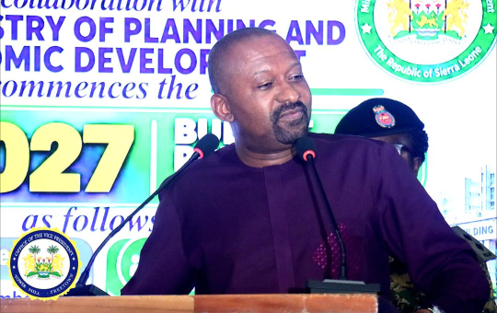
Opening the FY2027 Budget Process at the Miatta Civic Centre on Wednesday 16 September 2026, the Vice President referred to the effects of COVID-19, the Russia-Ukraine war and continuing instability in the Middle East, noting that international developments could quickly influence domestic prices, public finances and the cost of doing business in Sierra Leone.
“We cannot determine what happens in global commodity markets or geopolitical conflicts,” he said, while calling for stronger fiscal discipline, improved budget credibility, better revenue performance, prudent debt management and stronger implementation of Government programmes.
Vice President Juldeh Jalloh said resilience must ultimately be connected to the ability of households and businesses to withstand shocks and continue producing, investing and creating jobs. He called for greater reliability in energy, improved infrastructure, stronger human capital, better access to finance and markets, and policies that encourage enterprise and investment.
He also said the Government’s 500,000-job target under the Youth Employment Scheme could not be achieved through public employment alone, making private-sector growth central to the strategy. “Sustainable jobs at the scale our country requires will depend on a thriving private sector,” he said.
Dr. Juldeh Jalloh said Sierra Leone’s development partners remained important to that effort, particularly as Government sought to strengthen institutions, improve the investment climate and attract additional private capital.
He thanked the EU, World Bank, IMF, AfDB and other development partners for their support and reaffirmed Government’s commitment to continued collaboration.
His remarks also align with the World Bank’s current Sierra Leone programme, which includes strengthening resilience, fostering inclusive economic growth and creating opportunities for jobs and private investment. Meanwhile, the EU’s 2026 engagement with Sierra Leone has included initiatives on youth empowerment, investment and the business environment, as the two sides mark 50 years of partnership.