


Martina Egbenda Elected President
Outgoing Leadership Tuma-Gento Jabbie Absent
By Alusine Daybreak
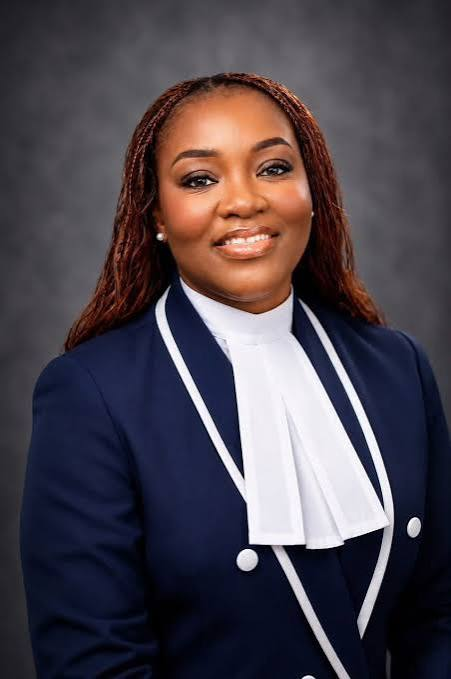
The Sierra Leone Bar Association appears to be facing renewed internal divisions following its Annual General Meeting (AGM) yesterday, where Martina Egbenda was elected as the new President alongside her executive team. While the election marks the beginning of a new chapter for the Association, concerns are emerging over whether the outcome will unite the legal profession or deepen existing disagreements within its ranks.
The AGM, which was expected to provide an opportunity for members to come together, review the Association’s activities and chart a common path forward, has instead raised questions about internal cohesion, participation and the relationship between the outgoing and incoming leadership.
At the centre of the controversy is the reported absence of outgoing President Madam Tuma- Gento Jabbie and members of her executive team from the meeting. Their absence has fuelled concerns among observers about the level of unity within the Association and whether the transition from the former administration to the new leadership will be smooth.
The situation has also drawn attention to reports that the outgoing President’s name was not on the voters’ list for the AGM. This development raises questions about the eligibility and verification procedures used in compiling the list of members entitled to participate in the voting process.
However, the reasons behind her reported absence and the circumstances surrounding the voters’ list have not been independently established. The Association’s official explanation, if any, would be important in providing clarity and ensuring that members and the public have a complete understanding of what transpired.
A New President, But Old Issues Unresolved
The election of Martina Egbenda as President presents an opportunity for fresh leadership, institutional renewal and the restoration of confidence among members of the legal profession.
However, leadership changes alone may not be sufficient to resolve disagreements that have developed over time. Where tensions exist between outgoing and incoming executives, the success of a new administration often depends on its ability to encourage dialogue, demonstrate transparency and create an environment in which all members feel represented.
The concern now is whether the latest election will mark the beginning of reconciliation or further entrench divisions within the Bar Association.
The reported absence of Madam Tuma Gento Jabbie and her executive team has become a significant talking point because the participation of outgoing leaders in a leadership transition can help demonstrate institutional continuity and respect for the Association’s democratic processes.
Their absence, however, should not automatically be interpreted as proof that they reject the new leadership. A clearer understanding of their reasons and position would be necessary before drawing such a conclusion.
The Voters’ List Controversy
One of the most sensitive issues emerging from the AGM is the report that the outgoing President’s name was missing from the voters’ list.
For an organisation representing legal practitioners, the credibility of an election depends not only on the outcome but also on the transparency and fairness of the procedures leading to it.
Members are therefore likely to seek answers about how the voters’ list was compiled, the criteria used to determine voting eligibility, and whether any procedure existed for challenging omissions or correcting errors before the election.
If the omission was administrative, a clear explanation could help address concerns. If it resulted from a dispute over membership or voting eligibility, the relevant rules and procedures should be made clear to the membership.
Transparency on these questions would help protect the integrity of the electoral process and prevent misunderstandings from developing into a wider institutional crisis.
It is important, however, to distinguish between questions raised about an election and established evidence of wrongdoing. Any allegation of irregularity should be assessed against the Association’s constitution, electoral regulations and the facts surrounding the AGM.
Will The New Executive Unite The Bar?
With Martina Egbenda now at the helm, attention will turn to how the new administration manages its relationship with members who may feel disconnected from the electoral process or concerned about the direction of the Association.
The Sierra Leone Bar Association occupies an important position in the country’s legal and democratic institutions. Its members contribute to legal representation, the administration of justice, constitutional accountability and the protection of fundamental rights.
For that reason, internal disagreements within the Association can attract public attention beyond the legal profession itself.
The new executive will therefore face the challenge of demonstrating that its leadership extends beyond those who supported its election. Building confidence across the membership, maintaining open communication and ensuring that decisions are guided by established rules will be essential to strengthening the Association.
A credible reconciliation process could also provide an opportunity for outgoing and incoming leaders to address their differences constructively and put the interests of the legal profession ahead of individual or factional disagreements.
A Test For The Legal Profession
The latest developments present a test not only for the newly elected President but also for the wider membership of the Sierra Leone Bar Association.
The Association must be able to demonstrate that disagreements can be managed through dialogue, constitutional procedures and mutual respect. Its reputation as a professional body depends in part on the confidence members have in its internal governance.
If questions surrounding the AGM remain unanswered, suspicions and disagreements could persist. Conversely, a transparent account of the election process, coupled with meaningful engagement between the different sides, could help prevent further divisions.
The new executive has an opportunity to set a different tone by encouraging participation, listening to concerns and making institutional unity a priority from the outset.
At the same time, the outgoing leadership and other concerned members have an opportunity to contribute constructively by presenting their concerns through the appropriate channels and supporting efforts to clarify disputed issues.
Conclusion: Unity Must Be Prioritised
The election of Martina Egbenda as the new President of the Sierra Leone Bar Association should be an opportunity to renew confidence, strengthen professional solidarity and reinforce the organisation’s commitment to democratic governance.
Yet the reported absence of Madam Tuma Gento Jabbie and her executive team, together with questions about the outgoing President’s omission from the voters’ list, has placed the issue of unity firmly in the spotlight.
Whether the Association becomes more divided or begins a process of reconciliation will depend on how its leadership and members respond to these concerns.
For now, the key questions remain: Why was the outgoing President reportedly absent? Why was her name missing from the voters’ list? And what steps will the new executive take to ensure that the Association moves forward with the confidence and participation of its membership?
Clear answers, transparent procedures and a genuine commitment to dialogue will be necessary if the Sierra Leone Bar Association is to put its differences behind it and focus on its broader responsibilities to the legal profession and the nation.