

– Hon. Abdul Kargbo Questions
By Daybreak Newspaper Political Desk
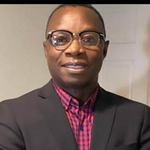
Hon. Abdul Kargbo, the Minority Leader of Parliament representing the All People’s Congress (APC), has offered his perspective on the political dynamics within the Economic Community of West African States (ECOWAS), arguing that many Sierra Leoneans underestimate the complexity of the regional body’s internal politics.
Speaking on the issue of ECOWAS leadership and decision-making, the opposition lawmaker stated that the politics within the regional bloc are far more sophisticated than what many observers from outside perceive.
According to Hon. Kargbo, many people wrongly assume that Sierra Leone’s Electoral Commission or its Chief Electoral Commissioner, Mohamed Konneh, would have any meaningful influence over the internal political processes that determine leadership within ECOWAS.
“The politics in ECOWAS is much stronger and completely different from what we see as outsiders,” Hon. Abdul Kargbo explained.
“I can tell you this has nothing to do with Mohamed Konneh or the Electoral Commission for Sierra Leone (ECSL). There are different political blocs operating within ECOWAS.”
He went on to explain that the regional organization is largely influenced by historical and linguistic alliances among member states.
According to him, three major blocs traditionally exist within ECOWAS:
The English-speaking countries;
The French-speaking countries; and
The Portuguese-speaking countries.
He further stated that, on several occasions, the Francophone countries align themselves politically with Lusophone nations to strengthen their bargaining position during important regional decisions.
“At some point, the French-speaking countries usually come together with the Portuguese-speaking countries to form an alliance,” he noted.
The Minority Leader also challenged the widely held belief that ECOWAS leadership automatically rotates among member states.
According to him, while there may be established traditions, the process is far more political than many people assume.
“I will not say it is completely rotational,” he stated.
“I believe the hierarchy within the ECOWAS Presidency are the ones eligible to vote. Maybe voting was done behind closed doors because nobody actually witnessed it, or perhaps they reached a consensus among themselves.”
He emphasized that only a limited number of high-ranking officials participate in selecting the leadership of the regional bloc.
“The political landscape within ECOWAS is much bigger than Mohamed Konneh and ECSL. Only a few people are actually allowed to vote.”
Hon. Kargbo’s remarks suggest that regional diplomacy, alliances, negotiations and geopolitical interests often determine outcomes more than public expectations or domestic political narratives.
Turning to another issue, the Minority Leader also raised concerns about the reported cost of Sierra Leone’s ECOWAS infrastructure project.
He argued that the figures circulating regarding the construction of the ECOWAS building in Sierra Leone deserve closer public scrutiny.
Drawing a comparison with Nigeria, Hon. Kargbo claimed that a significantly larger and more modern ECOWAS complex was reportedly constructed there at a lower cost.
“In the area of the ECOWAS building in Sierra Leone, the money involved is too much,” he said.
“The Nigerian people reportedly used about US$56 million to build a much bigger and better structure with skyscrapers compared to our ECOWAS building, which is said to have cost over US$100 million.”
Based on that comparison, Hon. Kargbo said he believes there are important questions that deserve answers regarding the project’s cost and value for money.
“I think something is wrong with the figures, and the quality of the building does not appear to match the amount reportedly spent,” he said, attributing responsibility to the current SLPP administration.
His comments are likely to fuel further public debate over government infrastructure spending, transparency and accountability, particularly on projects financed through public resources or external funding.
The Minority Leader’s observations come at a time when discussions about governance, prudent public expenditure and regional diplomacy remain central to Sierra Leone’s political discourse ahead of future elections.
As with many politically sensitive issues, the claims regarding the ECOWAS building’s cost and comparative value remain matters of public debate and would require verification through official project documents, procurement records and government explanations. The Government of Sierra Leone has previously defended major infrastructure investments as being undertaken in accordance with national development priorities and applicable procurement processes.