
By Musa Conteh
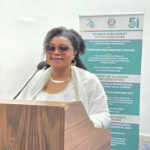
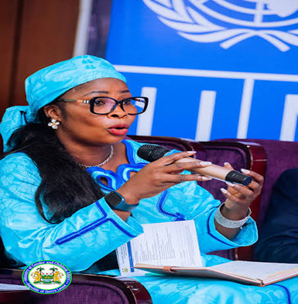
At the weekly government press briefing hosted by the Ministry of Information and Civic Education on Tuesday 12 May 2026 at the Miatta Civic Center, Youyi Building in Freetown, the Minister of Gender and Children’s Affairs, Dr. Isata Mahoi, delivered a passionate address highlighting the growing challenges confronting families, women and children in Sierra Leone.
Dr. Mahoi described the current situation as a serious national concern, warning that family instability, inequality and social neglect continue to place thousands of women and children at risk across the country.
She noted that girls living in unstable homes or heading households are more exposed to abuse, exploitation and emotional hardship, especially in rural communities where opportunities and support systems remain limited.
According to the Minister, available data shows that girls in rural areas are far more vulnerable to poverty, neglect and limited access to opportunities than those living in urban centers.
She stressed that national development cannot be meaningful if women and children continue to face exclusion and inequality.
“No child or woman should be left behind in the development process of this country,” she emphasized.
Dr. Mahoi explained that her ministry continues to rely on data collection and reporting mechanisms, including the national 116 Child Protection Helpline, to monitor cases involving child abuse, violence, neglect and exploitation across Sierra Leone.
She disclosed that reports from these systems reveal increasing concerns surrounding domestic violence, child neglect and social vulnerability within many homes and communities.
The Minister also highlighted strides made in promoting women’s participation in governance and public service, pointing out that women now make up a large percentage of workers in sectors such as healthcare.
However, she maintained that representation alone is insufficient, stressing that women must also be given greater leadership and decision-making responsibilities in national institutions.
A major part of her address focused on the importance of women’s empowerment in building stable families and stronger communities.
According to Dr. Mahoi, economically empowered women are better positioned to care for their children, support household stability and contribute positively to national growth.
She added that empowering women plays a vital role in reducing domestic violence, improving child welfare and strengthening social cohesion within communities.
The Minister further cautioned against harmful traditional and cultural practices that continue to undermine the rights and wellbeing of women and children.
She explained that some family-related problems are deeply rooted in household conflicts, favoritism and unequal treatment of children, particularly within extended and complex family structures.
Dr. Mahoi warned that such conditions often lead to emotional trauma, poor educational outcomes and increased vulnerability among children and young people.
She also expressed concern over the growing number of female-headed households, acknowledging the strength and resilience of many women while noting the financial and emotional pressures they continue to endure.
According to her, the weakening of family systems is contributing to broader societal issues, including rising numbers of street-connected children, youth vulnerability and increasing social instability.
Dr. Mahoi called for stronger cooperation between parents, communities, religious leaders and child protection institutions to address the crisis affecting families nationwide.
She reaffirmed government’s commitment to expanding social welfare services, strengthening child protection mechanisms and promoting gender equality as a pathway toward sustainable national development.
“Strong families build strong nations,” the Minister concluded.