



APC MPs Accused of US$100,000 and SUV Bribe
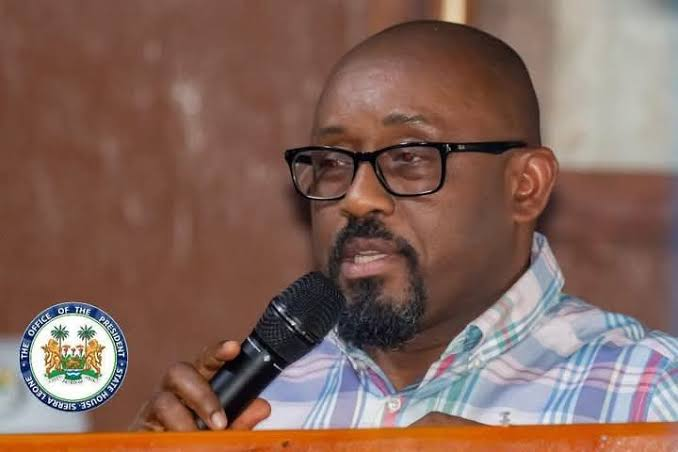
A leaked audio purportedly featuring APC Hon. Sorieba Alhaji Turay, popularly known as Tamemkoh, Member of Parliament for Tonkolili District, has reignited a growing political controversy surrounding allegations that opposition lawmakers were offered substantial financial incentives and brand-new vehicles to support the proposed Constitutional Amendment Bill.
The emergence of the recording has added a new dimension to allegations previously raised by Hon. Peter Yamba, Chairman of Parliament’s Oversight Local Government Committee, and Hon. Abdul Kargbo, the APC Minority Leader.
According to the allegations made by the two opposition MPs, APC Members of Parliament were each offered US$100,000 and a brand-new SUV as an inducement to support the Constitutional Amendment Bill. They have maintained that the alleged offer was rejected by the MPs.
However, the leaked audio has now triggered fresh questions about what may have happened behind the scenes.
Comments attributed to Hon. Sorieba Alhaji Turay appear, on the face of the recording, to raise questions about whether the alleged offer was uniformly rejected or whether some individuals may have at least considered the possibility of accepting it.
That apparent contradiction has transformed what was already a politically sensitive debate into a potentially explosive controversy.
What exactly happened behind closed doors?
The central question now confronting the political establishment is straightforward but serious:
Was the alleged US$100,000-and-SUV offer rejected outrightly by APC lawmakers, or did some MPs contemplate accepting it before ultimately deciding otherwise?
At this stage, the leaked recording alone does not establish that any MP accepted money, received a vehicle, or agreed to vote in favour of the proposed constitutional changes.
The contents of the audio, its full context, the identity of all individuals involved in the conversation, and the circumstances under which the recording was made would all need to be independently verified before definitive conclusions can be reached.
Nevertheless, the recording has intensified public interest because it appears to raise questions about the consistency of previous statements concerning the alleged inducement.
A political controversy with constitutional implications
The controversy comes at a particularly sensitive moment in Sierra Leone’s political debate, with Parliament facing intense scrutiny over proposed constitutional amendments.
The disagreement between the governing side and opposition has already generated considerable political tension, particularly over questions surrounding the proposed changes and their potential consequences for the country’s democratic and electoral system.
Against that backdrop, allegations that lawmakers could have been offered money and vehicles to influence their position would represent a matter of considerable public interest if substantiated.
Parliamentarians are expected to make decisions based on constitutional principles, the interests of their constituents and their understanding of the national interest—not private financial inducements.
That is why the latest audio has generated so much discussion.
Did the audio expose a contradiction?
The earlier position attributed to Hon. Peter Yamba and Hon. Abdul Kargbo was that APC MPs rejected the alleged offer.
But if the statements in the leaked recording are accurately understood and placed in their proper context, some listeners may interpret them as suggesting that there was discussion or consideration surrounding the alleged inducement.
That creates an apparent contradiction that demands clarification.
Did the MPs reject the proposal immediately?
Was there an initial discussion before the proposal was rejected?
Were different MPs approached separately?
Did anyone actually receive or negotiate over the alleged money or vehicles?
Or has the leaked audio simply been taken out of context?
These are questions that cannot be answered conclusively from a leaked recording without further evidence.
Public demands answers
The controversy is likely to fuel demands for greater transparency from the politicians involved.
Members of the public may reasonably expect those named or implicated in the controversy to explain precisely what was discussed, who made the alleged offer, when it was made, and whether any financial or material inducement was actually placed before lawmakers.
If the allegation of a US$100,000 payment and a brand-new SUV for each MP is false, those making the allegation should be able to explain why they believe it to be true.
If it is true, the public will want to know who allegedly made the offer and what was expected in return.
And if the leaked audio has been misunderstood, Hon. Sorieba Alhaji Turay and others referenced in the controversy have an opportunity to provide the missing context and put the matter to rest.
The bigger question: integrity of Parliament
Beyond the personalities involved, the controversy raises a much larger question about the integrity of parliamentary decision-making in Sierra Leone.
Constitutional amendments can have consequences that extend far beyond one parliamentary session or one political party. They can shape institutions, elections, governance and the country’s democratic future.
For that reason, any allegation that lawmakers were offered money or material benefits in exchange for supporting constitutional legislation deserves serious scrutiny—not merely because of the political implications, but because of the potential damage such allegations could do to public confidence in Parliament.
The controversy also places greater importance on evidence.
Political accusations, leaked recordings and counter-accusations can quickly dominate public discourse. But allegations should ultimately be separated from established facts.
Leaked audio puts spotlight on Tamemkoh
Hon. Sorieba Alhaji Turay now finds himself at the centre of renewed public attention following the circulation of the audio.
The key issue is not simply what was said in the recording, but what the statement meant in its full context.
Was he describing an offer that was firmly rejected?
Was he referring to discussions among lawmakers?
Was he recounting information received from another person?
Or has the recording been interpreted in a way that does not accurately reflect the broader conversation?
Those questions can only be properly answered if the full recording is examined and the lawmaker is given an opportunity to explain his remarks.
The Political Storm is far from Over
As the debate over constitutional reform continues, the leaked audio has introduced another layer of controversy into an already highly charged political environment.
The competing narratives are now clear.
One side maintains that an alleged financial and vehicle package was offered to APC lawmakers and rejected.
The leaked audio, however, has prompted questions about whether the situation was more complicated than that account suggests.
Until credible evidence establishes otherwise, the allegation remains an allegation—not a proven fact.
But the recording has undoubtedly raised questions that will be difficult for political actors to ignore.
Was the alleged offer rejected from the very beginning, or did some lawmakers seriously consider taking the money and vehicles before the proposal was ultimately rejected?
That is the question now dominating the conversation.
Listen to the full leaked audio, consider the statements carefully, seek the complete context—and make up your own mind.
Editor’s note: The allegations concerning US$100,000 payments and SUVs, as well as the interpretation of the leaked recording, have not been independently verified. The individuals concerned should be given the opportunity to respond, and the authenticity and full context of the audio should be established before any definitive conclusion is reached.