

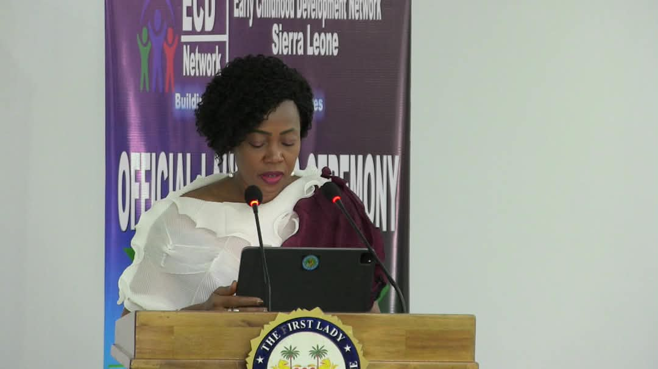
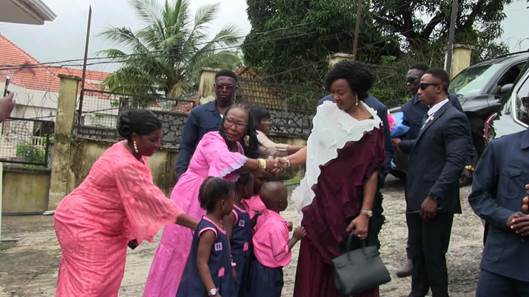
The Government of Sierra Leone, through the Ministry of Basic and Senior Secondary Education, in partnership with UNICEF and development partners, on Tuesday 15th September 2026 officially launched the Early Childhood Development Network, a new platform aimed at strengthening coordination, collaboration, and investment in services that support children during their earliest years of life. The launching brought together government officials, development partners, civil society organizations, academia, and child-focused stakeholders to advance a shared vision for ensuring that every child in Sierra Leone receives the nurturing care, protection, health, nutrition, and early learning opportunities needed to thrive.
In her statement, the Chief Education Officer in the Ministry of Basic and Senior Secondary Education said the launch of the Sierra Leone Early Childhood Development Network was a platform that would shape the future of the nation by shaping the lives of its youngest citizens. She stated that early childhood is the foundation of learning, growth, and character, adding that if children are nurtured in their earliest years, the nation is nurtured. She described the network as not just an initiative but a movement, a movement to ensure that every child, regardless of where they are born, has access to quality, inclusive, and sustainable early childhood services. She emphasised that this cannot be achieved by one ministry alone and requires coordination between government ministries, civil society, development partners, academia, and the community. Together, she said, stakeholders must weave a safety net of health, nutrition, protection, play-based learning, gender equality, and family support, and integrate these into the educational system so that no child is left behind. She commended the efforts of the African Early Childhood Network, AfECN, ADRA, RNC, and UNICEF, and all partners who stood with the Ministry to make the day possible, noting that their commitment is proof that when we invest in children, we invest in Sierra Leone’s future. As Chief Education Officer, she reaffirmed government’s commitment to advancing early childhood development and said the network must be a platform for advocacy, knowledge sharing, and innovation.
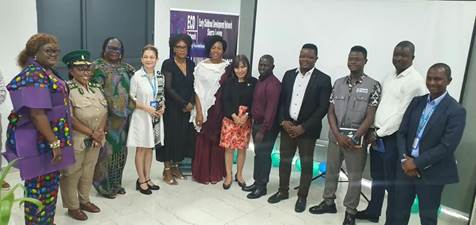
It must champion the establishment of more ECD centres across the country, because every child deserves a place to grow, to play, to learn, and to dream. She reminded all present that it takes a village to raise a child and welcomed all into that village, expressing hope that the network would be the happiest of collective efforts to nurture the potential of every child, strengthen the educational system, and build a brighter Sierra Leone.
Making a presentation on Early Childhood Education, Mrs. Melody Martin said the platform will help shape the future of the nation by shaping the lives of its youngest citizens. She said early childhood is the foundation of learning, growth, character, and lifelong development, adding that if children are nurtured in their earliest years, the future of Sierra Leone is being nurtured. She stated that the network is not simply an initiative but a movement to ensure that every child, regardless of where they are born or their circumstances, has access to quality, inclusive, equitable, and sustainable early childhood development services. She stated that this vision cannot be achieved by one ministry or institution alone and requires strong coordination and collaboration among government ministries and agencies, civil society organizations, development partners, academia, community leaders, families, and other stakeholders. Together, she said, stakeholders must weave a strong safety net that brings together health, nutrition, child protection, play-based learning, gender equality, and family support, and must integrate these essential elements into the education and social systems so that no child is left behind. She commended the efforts of the African Early Childhood Network, ADRA, RNC, UNICEF, and all partners who contributed to making the important day possible, noting that their commitment demonstrates a simple but powerful truth that when we invest in children, we invest in Sierra Leone’s future.
In her remarks, the UNICEF Country Representative, Mariko Kagoshinra, said the event was more than the launch of a platform, describing it as a shared commitment to give Sierra Leone’s youngest children the best possible start in life, from nurturing care in the earliest years to quality early learning and pre-primary education. She said early childhood development is about giving every child the best possible start in life, supporting the whole child from the very beginning through good health and nutrition, protection and safety, responsive caregiving, play, early stimulation, and opportunities to learn. Early childhood education, she noted, is an essential part of this journey, as quality, play-based pre-primary education helps young children build confidence, curiosity, social skills, and the foundations they need for school and for life. She observed that Sierra Leone has already taken important steps through the National Early Childhood Development Policy and its alignment with the global Nurturing Care Framework, which provides a strong foundation for integrating services from birth through the early years and for building a stronger bridge to quality early childhood education and school readiness. She described the network as a practical space to listen to one another, share what is working, solve challenges together, and connect services for young children across homes, communities, health facilities, and early learning centres. She acknowledged the Global Partnership for Education and the Government of Iceland for their support in bringing early learning services closer to children and families across the country. That partnership, she said, has supported nearly 4,500 pre-primary teachers, reached more than 8,000 children through early childhood education programmes, and helped construct 68 ECE centres. She said these investments are helping to strengthen the foundation of early learning and expand opportunities for young children across Sierra Leone, adding that the collective task is simple but urgent, to make sure that every child, especially the most vulnerable and those living in underserved communities, benefits from age-appropriate support.
Officially launching the Early Childhood Education Network, Her Excellency Dr Fatima Bio underscored the importance of the launch and said the true measure of a country is not found only in its buildings, its roads, its economy, or its natural resources, but in the way it cares for its children. She said the future of Sierra Leone begins with its children, and that future begins long before a child enters the classroom. It begins in the home, in the arms of a mother, the care of a father, the guidance of a caregiver, and the protection of a community. She noted that over the years she has travelled across the country and met mothers and families from all walks of life, listening to their hopes, their struggles, and their dreams, and that one dream is shared by mothers everywhere, the simple wish that their children have a better life than they had. She recalled speaking with a young mother who held her baby close and said words that have remained with her, that she may not have much to give her child but wants her to have a chance. That mother, she said, reminded her of something very important, that children should not have to depend on chance.
The First Lady said a child’s future should not be determined by whether they were born in Freetown or in a remote village, whether their parents are wealthy or struggling, or whether they have access to resources or are growing up with very little, stressing that every child deserves a strong start. She said the National Early Childhood Development Network is more than the launch of another programme or initiative, describing it as a statement about the kind of nation the country wants to build, a declaration that every child matters, and a commitment that no child should be forgotten, neglected, or left behind simply because of where they were born. She noted that the first years of a child’s life are not simply another stage of development but the foundation upon which everything else is built, as it is during these early years that children begin to develop their minds, their confidence, their emotional well-being, and their ability to learn and relate to others. When we invest in early childhood development, she said, we are not merely investing in children but in the future of Sierra Leone.
Quoting an African proverb that the child who is not embraced by the village will burn it down to feel its warmth, she said the proverb carries a powerful message, that a child is never the responsibility of one mother or one father alone but belongs to the family, the community, and ultimately the nation. Our responsibility, she said, is clear: to embrace every child, nurture every child, protect every child, and give every child the opportunity to thrive. She expressed particular pleasure at seeing government, communities, development partners, civil society, health workers, educators, and families coming together around one common focus, because no single institution can do this work alone. It will take parents who are supported and empowered, caregivers who are trained, respected, and valued, teachers who understand the importance of the earliest years, health workers who can reach children and families where they are, communities that protect their youngest members, and leadership that is willing to put children at the centre of national development.
Speaking as a mother, Dr Fatima Bio said that when a child is sick, a mother does not sleep; when a child is hungry, a mother feels that pain; when a child is unsafe, a mother worries; and when a child succeeds, a mother’s heart is filled with pride. That is why, she said, the well-being of Sierra Leone’s children must never be treated as somebody else’s responsibility, because their well-being is our responsibility. She noted that the children of Sierra Leone are not waiting for tomorrow, they are here today, in every village, every town, and every district, watching and looking to their leaders for leadership, protection, opportunities, and hope. She urged all not to fail them and to be the generation that chooses to invest in children before challenges become crises, and the generation that understands that the greatest national resource is not only what lies beneath the soil but what lives within the children, their minds, their dreams, their talents, their potential, and their hopes for a better Sierra Leone.
She said the country must build a nation where a child can be born anywhere and still have the opportunity to become anything, where poverty does not determine potential, where every mother has the support she needs to give her child the best possible beginning, and where every child is seen, valued, protected, and given the opportunity to thrive. That, she said, is the Sierra Leone she believes in and the Sierra Leone that must be built together. As the National Early Childhood Development Network was launched, she called on all to make a promise, not only in the room but across the country, to put children first, and to ensure that the decisions made today are decisions that children will thank them for tomorrow. She said we must be remembered as the generation that understood that when we care for our children, we care for the soul of the nation. When we invest in a child, we invest in hope; when we invest in hope, we invest in the future; and when we invest in the future, we build the Sierra Leone we all want to see. She urged all never to lose sight of the little faces behind the policies, programmes, and plans, and always to remember that behind every statistic is a child with a name, a family, a dream, and a future. She concluded by praying that Allah continues to bless, protect, and guide the children of Sierra Leone.